Your cart is currently empty!


This guide explains what insulated container liners are, when you might need them, and what to consider when selecting one.
A shipment can leave your warehouse at the correct temperature and still face heat, cold, sunlight, or changing conditions before it reaches its destination. Loading docks, airport handling, cross-docking, and delays can all expose temperature-sensitive products to conditions outside their required range.
That is where Best Insulated Container Liners can provide an extra layer of thermal protection. They are not substitutes for refrigerated transport or for temperature monitoring. Rather, they can help to mitigate the effect of outside temperature changes during the movement of your products.
Here’s the thing: protecting a cold-chain shipment is not about using one product. It is about putting the right protection, transport controls, and monitoring together.
An insulated container liner is used to reduce the transfer of heat between cargo and the external environment by providing a layer of protection around or inside a shipping container.
Thermal insulation is designed to slow down temperature exchange, which may be beneficial if the shipment will pass through regions with a climate that is vastly different than the required temperature of the product being shipped.
Insulated liners can be constructed of reflective films, woven materials with air bubbles, or aluminum-based layers.
Tempnote’s Insupod range includes thermal covers and box or container liners with various grades and thicknesses. Some liners have even been developed to reflect the sun and water, and decrease the rate of temperature exchange.
Regular packaging mainly protects goods from handling and physical damage. Insulated shipping liners add another layer of protection against external temperature changes.
That difference matters when your cargo has a specific temperature requirement.
A refrigerated truck or storage area can maintain a controlled environment, but your shipment may not stay inside that environment every minute.
Consider a pharmaceutical shipment waiting on a loading dock before it enters a refrigerated vehicle. Or a food shipment being transferred between vehicles. Those short periods can expose products to outdoor conditions.
WHO guidance covers the safe storage and transport of time- and temperature-sensitive pharmaceutical products and includes guidance on temperature-controlled transport, monitoring, and shipping containers.
Your shipment may face temperature changes during:
This is why cold chain container liners can be useful as part of a wider protection plan.
The primary function of an insulated liner is to provide a barrier between your shipment and environmental factors.
Barriers may be created by the use of insulation, but it depends on how quickly heat can penetrate the barrier. Thick insulation, a strong shipment design, and a controlled environment with a limited exposure time will increase protection against heat penetration.
Reflective materials can help reduce heat exposure from sunlight. Tempnote lists solar reflectivity and reduced temperature exchange among the features of its Insupod thermal-cover products.
Some thermal products also offer water resistance. This can be useful when cargo is exposed to rain or other outdoor conditions during handling.
Suppose temperature-sensitive products leave a controlled warehouse on a hot day. The truck is ready, but loading takes longer than expected. An insulated liner can provide an additional barrier during that period.
It does not guarantee that the shipment will remain within a specific temperature range. Your packaging and transport system still need to be selected and tested for the product’s requirements.
The need for thermal protection can vary by industry and product.
Medicines, biologics, and other temperature-sensitive healthcare products may require controlled transport conditions. WHO specifically provides guidance for time- and temperature-sensitive pharmaceutical products.
Perishable foods can also benefit from protection against unwanted temperature exposure during transportation.
For logistics providers, shipments can pass through several handling points. Adding thermal protection can help reduce exposure while cargo moves between storage and transport environments.
Tempnote lists pharmaceuticals, food, life sciences, chemicals, logistics, and 3PL among the industries it serves.
Do not choose a liner based only on thickness or price. Start with your shipment.
| What to check | Why it matters |
|---|---|
| Required temperature | Shows the protection your product needs |
| Transit time | Longer exposure can require more protection |
| Outside conditions | Heat, cold, and sunlight affect risk |
| Shipment size | Determines the required liner dimensions |
| Material | Affects insulation and reflective performance |
| Monitoring | Shows what temperature the shipment actually experienced |
For example, Tempnote lists Insupod configurations for applications including 2°C to 8°C and 15°C to 25°C, with different materials, thicknesses, and stated protection periods.
Here is an important point: insulation protects, while monitoring tells you what actually happened.
A temperature logger can record conditions during transit and help identify excursions. WHO also identifies temperature monitoring devices as an important part of a quality-assured temperature-controlled transport system.
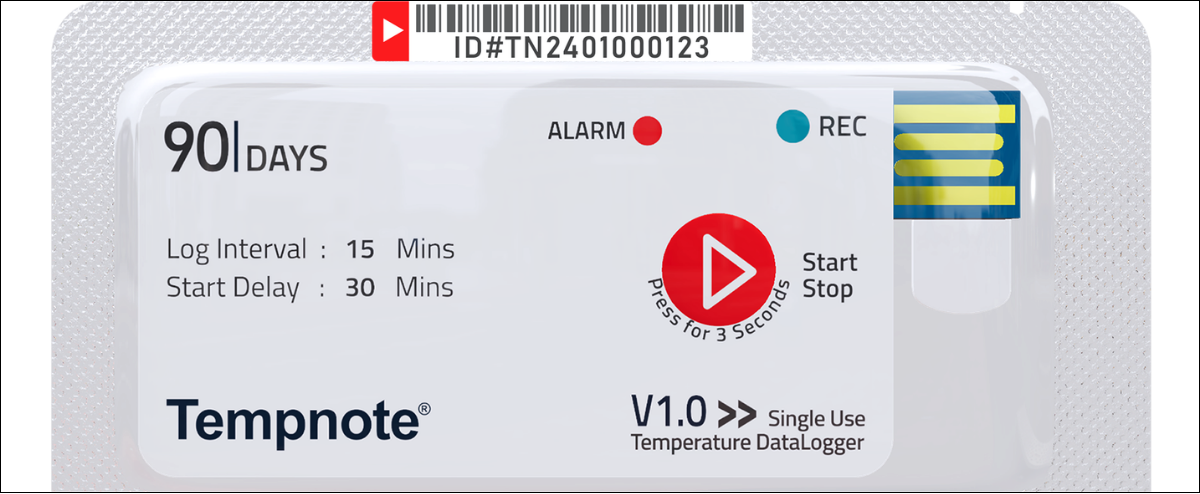
Tempnote combines temperature monitoring products with insulated thermal covers for cold-chain applications. Its monitoring range includes data loggers and real-time solutions with temperature alerts and shipment data access.
So, instead of treating insulation as the entire solution, think of your system as:
Suitable packaging + thermal protection + controlled transport + temperature monitoring
Temperature-controlled shipping does not stop at the warehouse door. Your products may face changing conditions during loading, transfers, road transport, and delivery.
The right Insulated Container Liners can add a useful thermal barrier and help reduce exposure to outside temperature changes. But the best approach is to match your liner to your product, required temperature range, transit time, and shipping conditions.
If you need help selecting cold chain packaging solutions, start by looking at the product requirements, then look at the thermal protection and monitoring options. Tempnote offers thermal covers, container liners, temperature data loggers, and cold-chain services for temperature-sensitive shipments.
Insulated container liners are thermal barriers that are placed around a cargo to control the effect of outside temperature fluctuations on temperature-sensitive products.
They work by employing insulating and reflective materials to control the effect of the transfer of temperature and to retard the transfer of temperature from the cargo to the surrounding environment.
Not always. Insulated liners do have their place, but will have to be combined with controlled transport, appropriate packaging, and temperature monitoring.
These liners can be utilized with pharmaceuticals, biotech products, food, life science products, and many others requiring protection from outside temperature fluctuations.
Check the temperature range, transport time, environmental conditions, the size and shape of the shipment, insulation material, and the required level of protective packaging.