Your cart is currently empty!


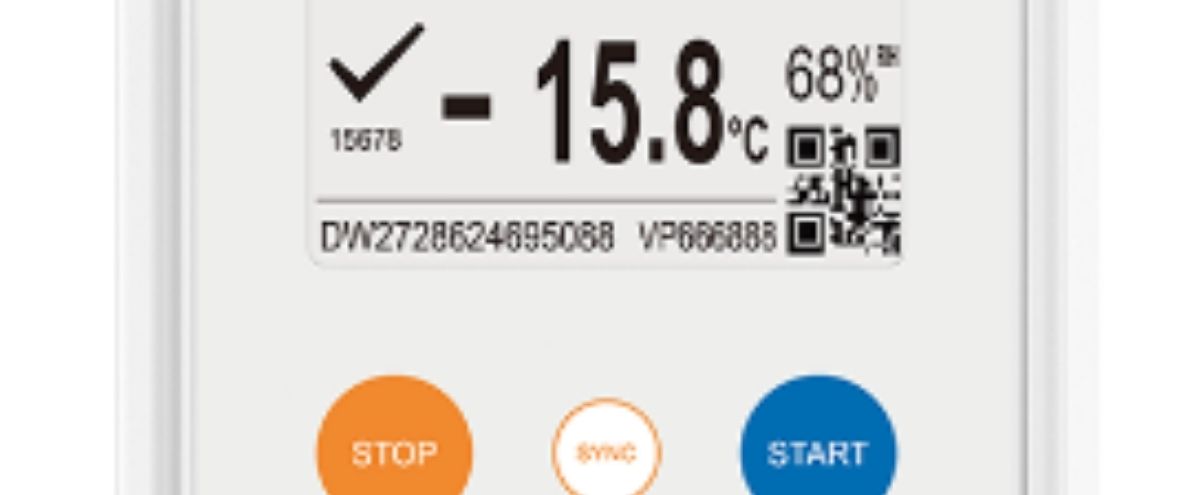
A temperature check at the end of a shipment cannot tell you everything that happened along the way. A pharmaceutical product may arrive within its required range after being exposed to an unsafe temperature earlier in transit. That is why Healthcare Cold Chain operations need more than a quick temperature reading.
Did you know?
The CDC’s July 2026 vaccine storage guidance recommends digital data loggers for routine vaccine storage, transportation, and temporary clinics, with at least one backup digital data logger or other temperature-monitoring device available.
So, what does this mean for your supply chain? A temperature data logger records conditions at set intervals, giving your team a time-based record instead of a single reading. This supports healthcare cold chain monitoring, helps teams review possible temperature excursions, and gives quality staff better information when handling temperature-sensitive healthcare products.
A temperature data logger is an electronic device that measures and records temperature at set time intervals. Unlike a basic thermometer, it creates a historical record that shows how conditions changed over time.
This matters because one temperature reading cannot tell you what happened during the hours before delivery.
The World Health Organization lists data loggers among the devices used to monitor temperatures across the cold chain. WHO also provides specifications for programmable temperature data loggers and other monitoring devices.
For example, a logger may record temperatures every 10 minutes during a shipment. Your team can then review the recorded values and check whether the required limits were maintained.
The Healthcare Cold Chain covers the controlled storage and transportation of products that need specific temperature conditions.
These products can include:
The CDC currently recommends digital data loggers for routine vaccine storage, transportation, and temporary clinics. Its July 2026 guidance also recommends having a backup monitoring device available.
Here’s the thing: a shipment does not become safe simply because its temperature looks correct when it arrives.
A data logger can show whether the product experienced an out-of-range temperature during transit. That historical record gives your quality team useful information when reviewing a possible excursion.
Effective Healthcare Cold Chain management needs more than refrigeration. Teams need reliable records that show whether storage and transport conditions stayed within the required range.
Data loggers can help monitor temperature conditions in refrigerators, freezers, warehouses, controlled storage areas, and during transportation.
According to the WHO January 2026 guidance on temperature mapping of pharmaceutical storage areas states that temperature mapping and monitoring of storage areas is essential for the storage of pharmaceutical products.
Temperature conditions during product transport can be unpredictable and can lead to out-of-range conditions. TempNote offers several data loggers for cold-chain applications.
Some systems can provide live temperature information and alerts. The TempNote Frigga V5D is a real-time temperature monitor and data logger that provides historical temperature data, alerts, and reports.
It is important for shipment quality assurance to choose the appropriate data logger for the product. The main consideration for choosing a data logger is assessing what the product requirement specification states.
Not every shipment needs the same device. Start with your product requirements, then select the monitoring method.
| Logger Type | Useful For | Main Advantage |
|---|---|---|
| Single-use | One-way shipments | Simple deployment |
| Multi-use | Repeated shipments | Can be used again |
| USB | Offline monitoring | Easy data retrieval |
| Real-time | High-value or closely monitored shipments | Live alerts and remote access |
| Dry-ice | Very low-temperature cargo | Designed for colder ranges |
When selecting a device, check:
Tempnote’s T32SU is one example of a device. It is a single-use logger with a measurement range from -30°C to +70°C, a tolerance of +- 0.5°C, reports temperature in PDF or CSV format, and is compliant with EN 12830.
For pharmaceutical temperature monitoring, the device should match the product and process requirements rather than simply having the longest battery life or lowest price.
A temperature excursion needs a documented response.
The CDC recommends taking immediate action when vaccine temperatures move outside the required range. Its process includes separating affected vaccines, documenting the event, following facility procedures, and seeking appropriate guidance before deciding what happens to the product.
A practical process is:
A logger does not keep products cold. Refrigeration, packaging, handling, and transport controls do that. The logger provides the temperature record needed to identify problems and support a quality review.
Consider a distributor sending temperature-sensitive medicines to a hospital.
The products arrived within the targeted time and the product shipment temperature was within limits. There is no evidence of a nonconformity. However, the data logger indicated the product shipment temperature was outside of limits during the transport.
Instead of relying on the arrival reading alone, the quality team can review the exact time, duration, and recorded temperatures. That information gives the team a stronger basis for its next action.
This is where Healthcare cold chain monitoring becomes useful: it turns temperature from a single check into a documented history.
Before sending temperature-sensitive healthcare products, confirm:
Reliable monitoring gives your team facts to work with when conditions change. A suitable logger can record temperature over time, show excursions, and support quality documentation across storage and transportation.
For healthcare cold chain processes, the target is not to collect maximum data. It is to collect the appropriate data. The collected data should facilitate making pertinent decisions on pharmaceutical products by all persons in the supply chain.
For your temperature monitoring needs, be it for storage or transportation, take a look at the products we offer at Tempnote, and compare the features with your requirements.
A Temperature Data Logger is an electronic device used to capture and store temperatures at specific intervals.
Data Loggers are important to the pharmaceutical industry, as they provide vital information to quality units regarding the storage and/or transport of pharmaceutical products.
Thermometers can capture the current temperature of the environment. A Data Logger captures the environment temperature over a period of time and can store the information for a long period of time.
The interval depends on the product and equipment being monitored. The CDC states that for vaccines, a Data Logger should be able to capture temperatures and store the information for at least every 30 minutes.
The course of action depends on the pharmaceutical product in question. However, most of the time, the pharmacist should be involved.