Your cart is currently empty!


Failure in the cold chain can affect the quality of products, safety, cost, and regulatory records. This guide explains how IoT in Cold Chain Logistics gives your team better visibility into temperature-sensitive shipments, supports faster response to temperature excursions, and helps maintain reliable monitoring records.
A shipment can arrive on time and still have a serious quality issue if its temperature moved outside the required range during transit.
That is the problem Benefits of IoT in Cold Chain Logistics Management is designed to address. Instead of relying only on information reviewed after a shipment arrives, connected monitoring can give your team access to current shipment conditions and alerts.
Best practices for vaccine storage involve temperature monitoring systems that check temperature status in real-time and notify staff in the event of a temperature excursion. These systems are recognized by the World Health Organization.
Table of Contents
IoT in Cold Chain Logistics means using connected devices and smart sensors to capture cold chain data.
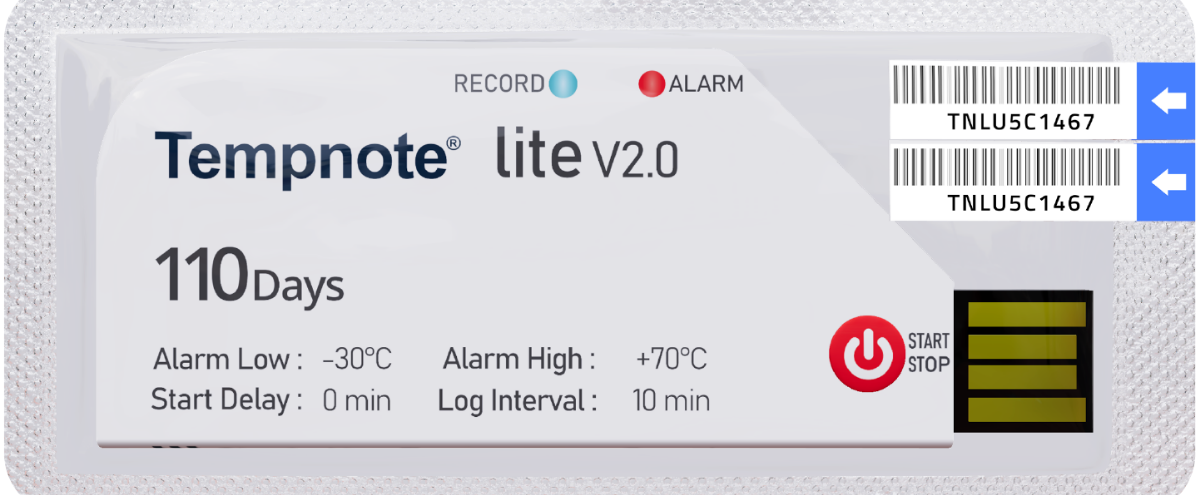
A temperature data logger measures the environmental conditions at fixed time intervals. IoT solutions take this a step further by transmitting the data and other conditions to a cloud platform that can be remotely accessed by users with authorized access.
For example, Tempnote’s Frigga real-time solutions provide temperature monitoring, GPS tracking, cloud access, and alerts. Some models also monitor factors such as humidity, shock, light, and route information.
The basic process is simple:
Sensor → Data → Cloud platform → Alert → Human action
That last step matters. Good monitoring does not replace trained staff or proper cold chain procedures. It gives your team better information to make timely decisions.
Traditional logging can tell you what happened during a shipment. Real-time temperature tracking can help you see what is happening while the shipment is still moving.
This difference matters when your cargo contains pharmaceuticals, biologics, food, or other temperature-sensitive products.
A connected cold chain tracking system can provide:
An example of this is the Frigga V5C, which provides real-time cloud monitoring and temperature alerts in a configurable reporting system.
Imagine your pharmaceutical shipment leaves a warehouse within its required temperature range. Several hours later, the temperature rises above the configured limit.
With a connected system, your team can receive an alert while the shipment is still in transit. You can then investigate the event and follow your established quality procedure instead of finding the problem only after delivery.
Having a monitoring device is just one part of cold chain compliance. You need a relevant system, proper procedures, proper equipment, calibration, validation, and appropriate records.
However, IoT cold chain monitoring can make the record-keeping side easier to manage.
WHO identifies electronic temperature monitoring and logging devices as tools used to monitor temperatures across cold chain operations.
Tempnote’s selected Frigga products list EN 12830 and 21 CFR Part 11 compliance, along with secure PDF and CSV reporting.
The FDA explains that 21 CFR Part 11 applies to certain electronic records and signatures maintained or submitted under applicable FDA requirements. It also highlights controls involving areas such as system access, audit trails, validation, and record retention.
So, what this really means is that digital monitoring can support your compliance process, but you should always confirm the requirements that apply to your specific operation.
A typical system follows four steps:
The device measures temperature as well as other variables such as humidity or light, depending on the model.
Connected devices can send information through available cellular or other communication methods to a cloud platform.
There can be a dashboard that displays shipment conditions, historical readings, location, and alerts.
When conditions move outside configured limits, alerts can prompt investigation and corrective action.
Some current Tempnote Frigga models support cellular connectivity, cloud reporting, GPS tracking, alerts, and multiple environmental measurements.
Don’t choose a monitoring system based only on whether it has IoT connectivity. Start with your actual shipping requirements.
| What to Check | Why It Matters |
|---|---|
| Temperature range | Your device must suit the product and shipping conditions |
| Accuracy | Reliable readings support better quality decisions |
| Reporting interval | More frequent readings can provide greater visibility |
| Battery life | The device should cover the expected shipment duration |
| Connectivity | Data transmission depends on the route and available network |
| Alerts | Teams need timely notice of configured deviations |
| Reports | Your quality team may need accessible records |
| Compliance needs | Requirements vary by product, market, and operation |
WHO’s 2026 guidance also continues to treat temperature monitoring and mapping as important parts of appropriate pharmaceutical storage conditions.
A strong cold chain is not simply about keeping a product cold. It is about knowing whether the required conditions were maintained and having useful information when something changes.
IoT in Cold Chain Logistics provides your team with the visibility they need for temperature-controlled shipments with monitoring sensors, cloud systems, alerts, and records. Together with the proper systems and equipment, these systems can aid visibility and speed response, thereby improving quality.
If your business needs greater visibility across temperature-sensitive shipments, explore Tempnote’s IoT cold chain monitoring solutions and review the available real-time monitoring options for your products and routes.
IoT in cold chain logistics refers to monitoring systems that collect and transfer data on temperature and location during the storage or transport of goods.
It can provide real-time data and alerts, helping your team identify potential temperature deviations while goods are still in transit.
A temperature data logger is a device that records temperature readings at defined intervals. Some connected models can also send data to a remote platform.
This will allow your team to have visibility into temperature as the cargo is being transported, allowing any issues to be addressed prior to the cargo arriving at its destination.
No. While implementation of IoT for cold chain monitoring can strengthen your documentation and quality processes, compliance is dependent on other aspects as well, such as requirements, processes, equipment, adequate validation, and proper handling.