Your cart is currently empty!


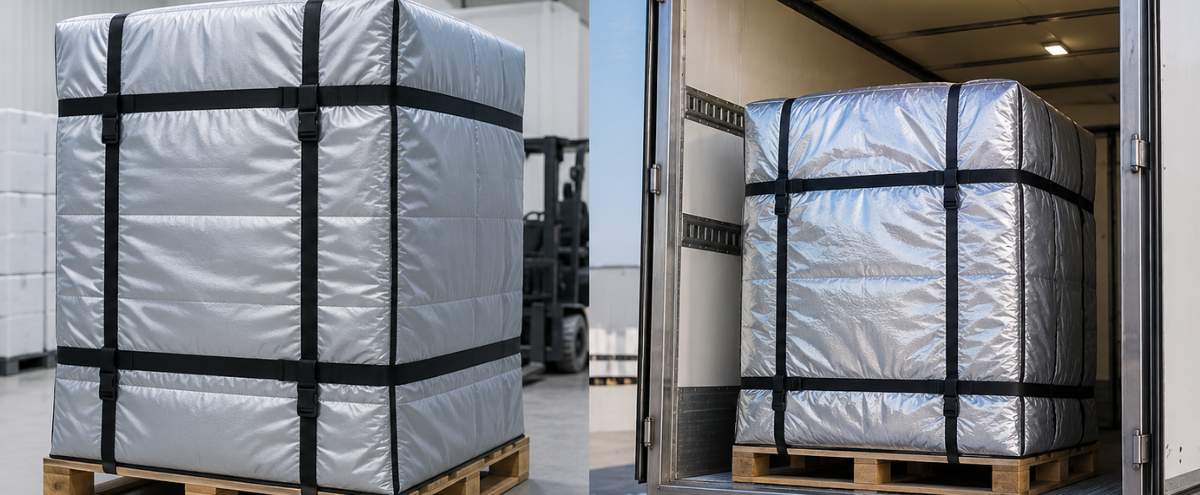
In this blog, we’ll talk about how reflective thermal covers can protect temperature-sensitive shipments during summer shipping, how they work, and how businesses can select the right cover for their cargo.
Sometimes a shipment leaves a refrigerated warehouse in good shape and still gets subjected to heat before it reaches its destination. In summer, loading delays, airport transfers, and outdoor handling pose risks to temperature-sensitive goods. This is where a Reflective Thermal Cover can help out.
For pharmaceutical companies, food distributors, and cold chain logistics providers, the goal is simple: Protect product quality throughout transportation. When used with appropriate packaging, refrigeration, and temperature monitoring, reflective covers add a layer of thermal protection that can help reduce the amount of heat gained.
A Reflective Thermal Cover is a type of insulated outer covering that helps prevent heat transfer between the ambient conditions and the packaged goods. Often, this type of cover includes a reflective layer along with insulating layers.
The reflective thermal cover can be beneficial when transporting pharmaceutical products, biotechnological materials, dairy products, seafood, etc.
A reflective surface will help reduce heat gain from the sun through the process of radiation.
The insulating materials will help reduce the rate of heat transfer, hence forming a thermal barrier for the cargo being transported.
But it does not generate any cool air.
Outdoor high temperatures can create challenges in temperature control, especially when shipments are out of controlled environments during loading, unloading, or between vehicles.
The U.S. Department of Agriculture advises that perishable food should not remain unrefrigerated for more than one hour when temperatures exceed 90°F (32°C). This is food-handling guidance, not a universal limit for commercial shipments, but it shows why heat exposure requires attention.
Common risk points include:
A pharmaceutical pallet might be outside a refrigerated vehicle for a short period while staff arrange its transfer. A suitable cover can provide additional protection during this period, although only temperature records can show whether the shipment stayed within its required range.
Reflection of heat from external sources by using cold chain logistics covers works via two main mechanisms.
The use of reflective material minimizes the solar energy that enters the cover. The cover may serve its purpose effectively when palletized cargo is exposed to direct sunlight during handling and transportation.
The insulating materials used in thermal coverings prevent heat transfer between the surrounding environment and the cargo. The degree of protection provided depends on the construction features of the covering.
Use of insulated thermal covers for transportation works effectively within the overall scheme of the cold chain. Refrigeration, correct packaging, handling, and temperature control remain crucial.
The World Health Organization’s guidance on time- and temperature-sensitive pharmaceutical products stresses proper storage and distribution practices. A cover should support those procedures rather than replace them.
If chosen for transportation, there are some practical advantages that reflective insulated pallet covers may bring.
Nevertheless, these advantages cannot guarantee that all the shipments will maintain the desired temperature for the required period of time. Businesses have to check the specifications of the products.
Before buying a cover, check these four factors:
| Factor | What you should check |
|---|---|
| Required temperature range | Confirm the product’s permitted storage and transport range. |
| Material and thickness | Review the reflective layers, insulation, and cover construction. |
| Exposure duration | Estimate loading delays, transfers, and expected transit conditions. |
| Monitoring requirements | Use suitable data loggers to record shipment temperatures. |
Also check pallet dimensions, cover fit, handling needs, and the supplier’s test data. If your cargo requires a controlled range such as 2°C to 8°C or 15°C to 25°C, do not assume that a cover designed for one application will suit every shipment.
Practical tip: Write down the cargo temperature limits, the expected outdoor exposure, the pallet size, and the monitoring plan before your next summer shipment. Share this information with your packaging supplier to determine appropriate covers.
Tempnote offers Insupod thermal covers for temperature-sensitive cargo. Its published product specifications list models with aluminum bubble foil construction, 97% reflectivity, and stated protection of 8+ hours for specified applications. These are manufacturer-listed figures, not a guarantee for every shipment or weather condition.
Tempnote also provides temperature monitoring solutions. Data loggers combined with appropriate thermal protection allow logistics teams to verify actual shipment conditions and to check for possible temperature excursions.
For more information, check out Reflective Thermal Covers for Shipping and compare the specifications to your cargo needs before you decide.
Summer cold chain protection is not just a refrigerated vehicle. A quality Reflective Thermal Cover can greatly reduce heat exposure during handling and transit, and monitoring provides evidence of the conditions your shipment endured.
Select a cover that is suitable for your cargo, the expected exposure, and the temperature range required. Contact Tempnote to learn more about our thermal cover options and find the solution that works best for your shipping needs.
A Reflective Thermal Cover uses reflective and insulation materials to help reduce exposure to outside heat. This helps to provide passive protection for the overall cold chain packaging solution.
It is known that reflective materials reduce the amount of absorbed solar radiation, and the insulating layer reduces the rate of heat flow. Performance depends on the cover and shipping conditions.
No. Thermal blankets are just a supplement; they do not cool the product itself. They are not substitutes for the refrigeration process.
It can be done provided that the specifications of the cover match those of the shipment. Businesses need to follow the best practices of packaging and monitor the temperatures in transit.
The parameters to be considered are: temperature range, pallet size, time of exposure, and product performance. Use of thermal blankets should be accompanied by temperature monitoring and control.
