Your cart is currently empty!


Objective
Pharmaceutical cold chain compliance means keeping temperature-sensitive medicines within their labeled storage range during storage and transport, and holding records that prove it. The Frigga T70 Pro logs temperature, humidity, location, shock, light, and tilt, sends real-time alerts, and produces PDF and CSV reports. It supports your compliance process. It does not replace validation, SOPs, or training.
A pharmaceutical shipment can arrive on time and still create a quality problem if nobody can show what happened to the product on the road. Cold chain compliance means keeping temperature-sensitive medicines within their required conditions in storage and in transit, with reliable records to match.
Heat, cold and handling problems creep in at many points: delays, loading and unloading, transfers between vehicles, refrigeration faults and rough handling. The World Health Organization treats temperature mapping and monitoring as integral to appropriate storage conditions for pharmaceuticals.
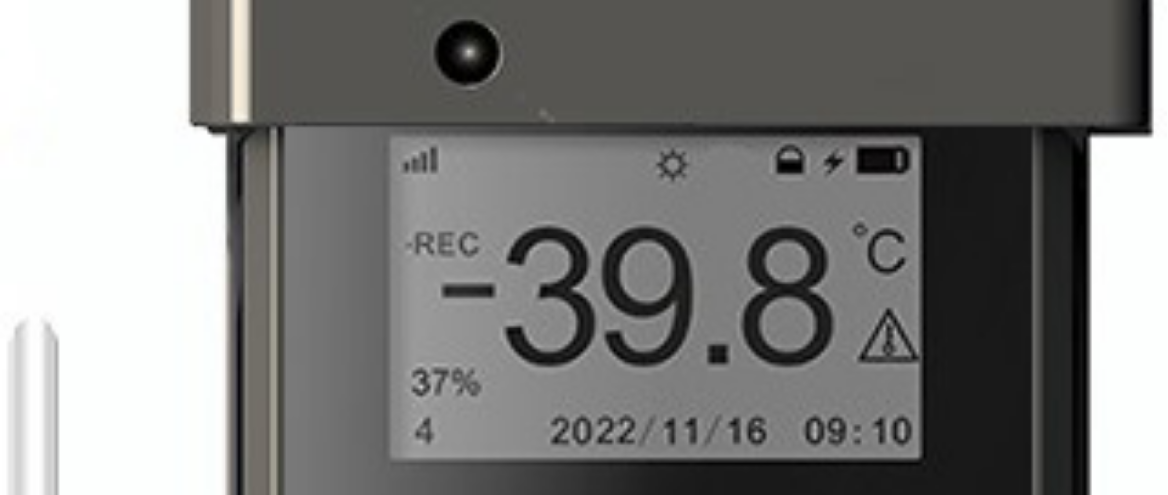
A reading taken at the delivery dock tells you very little about the journey. A data logger records conditions throughout the shipment, so your team has evidence to review later. The Frigga T70 Pro monitors temperature and humidity and adds real-time data, location information, alerts, and shipment reports.
One caution before we go further. A monitoring device does not make an operation compliant on its own. Procedures, validation, calibration, training, and quality controls still carry the weight. The value comes from pairing dependable data with a well-run process.
It is the practice of maintaining the storage and transport conditions a medicine or other temperature-sensitive product requires. It also means having procedures and records that let your team confirm those conditions were met.
The exact requirements depend on the product, its labeled storage conditions (commonly 2–8 °C for refrigerated products, or controlled room temperature), and the regulations that apply to your operation. In the EU, that includes the GDP Guidelines (2013/C 343/01).
A temperature record gives your quality team evidence of the conditions a shipment experienced. Without one, it is hard to establish whether a product stayed within range during a delay or transfer.
Picture a refrigerated shipment that reaches a distribution center several hours late. The product may look completely normal, but appearance cannot tell you whether the required temperature was maintained. A recorded history gives your team something measurable to review.
Monitoring should not stop when a product leaves the warehouse. EMA guidance states that storage conditions during relevant pharmaceutical transportation should be validated or monitored with a suitable temperature-measuring device capable of showing fluctuations. For biological products, EMA adds that temperature should be routinely monitored throughout shipping.
This is why continuous monitoring is more useful than a check at the destination: it covers the whole route, including the parts nobody was watching.
Recording data is useful. Seeing it while the truck is still moving is better, because you can still do something about it.
The T70 Pro supports real-time monitoring through its cloud platform. According to Tempnote’s product documentation, the device sends alerts by SMS, email, and app, and shipment data is stored in the cloud.
In practice, your team can:
Temperature sits at the center of cold chain control, but it rarely tells the whole story. The Frigga T70 Pro also records or monitors:
| Data recorded | How it can help your team |
|---|---|
| Temperature | Shows the recorded thermal conditions |
| Humidity | Adds environmental information |
| Location | Shows where an event occurred |
| Route | Provides shipment movement history |
| Shock | Identifies recorded physical impact events |
| Light | Provides information about light exposure |
| Tilt | Adds handling information |
All seven are listed in Tempnote’s published product material.
Here is how they work together. A shipment records a temperature change during a delay. Location and route data show where it happened and what was going on at that point. That does not prove why the temperature moved, but it gives your investigators a real starting point instead of guesswork.
Compliance is not just about collecting readings. Your team also needs records that stand up when a shipment is questioned.
Per Tempnote’s datasheet, the T70 Pro stores data in the cloud and supports encrypted PDF and CSV reports. A USB port allows a backup PDF download. Reviewers can then work from:
Tempnote also states that the T70 Pro supports FDA 21 CFR Part 11 requirements for data integrity and includes Auto Flight Mode for airline compliance.
Say a manufacturer is sending a temperature-sensitive medicine to a distributor.
Before dispatch, your team checks the device, confirms the required temperature limits, and makes sure monitoring is active.
In transit, the team reviews temperature data and receives alerts if conditions need attention. Location and route data add context.
On delivery, quality staff review the recorded data and generate a report for the shipment file.
The logger supplies the evidence. Your SOPs decide what happens next.
A logger is one component of a wider pharmaceutical quality system. You will likely still need:
WHO identifies temperature monitoring and temperature mapping as important parts of pharmaceutical storage control.
Good monitoring leaves you with a clear record of what happened to your shipment.
With temperature records, alerts, location data, and electronic reports, the Frigga T70 Pro can support the monitoring and documentation needs of pharmaceutical logistics teams. Use it alongside your quality system and the regulations that apply to you.
Want to see whether it fits your lanes and procedures? Explore the T70 Pro specifications and check its monitoring, alerting, and reporting features against your shipment requirements.
A device that records temperature over time during storage or transport. Those records help teams confirm whether required conditions were met.
It shows shipment conditions as they happen and triggers alerts when something needs attention, so problems can be investigated while the product is still in transit.
No. A logger handles monitoring and record-keeping. Compliance also depends on procedures, validation, calibration, training, packaging, and the regulations that apply to you.
It tracks temperature, humidity, location, route, shock, light, and tilt, with data available through Tempnote’s cloud platform.
They are your evidence of shipment conditions. EMA guidance calls for suitable temperature monitoring during transportation in relevant pharmaceutical contexts.