Your cart is currently empty!


This guide explains the benefits of using a GPS-based temperature monitoring system, identifies the circumstances under which the system could improve your business processes, and outlines the key aspects you need to evaluate in a monitoring solution.
A shipment can reach its destination on time and still have a serious problem: the product may have been exposed to the wrong temperature along the way. For pharmaceuticals, food, laboratory materials, and other sensitive goods, knowing only the shipment location is not enough. You also need to know what is happening to the cargo while it is moving.
That is where a GPS Temperature Data Logger can help. It combines temperature records with location data and, in connected systems, gives your team access to shipment information while goods are in transit.
A GPS Temperature Data Logger is a monitoring device that records temperature during transportation as well as location information. Depending on the system, data can be sent to a cloud so that your team can access the information regarding the shipment.
A standard temperature logger might provide information about the temperatures, while a GPS temperature logger gives the added context of location data for the duration of the shipment.
For example, in the case of a pharmaceutical shipment that experienced a temperature deviation, providing location information and time stamp could be vital in helping logistics teams investigate the issue.
WHO guidance states that temperature monitoring devices are an integral part of quality-assured temperature-controlled transport for time- and temperature-sensitive pharmaceutical products.
The process is easier to understand when you break it into a few simple steps.
Before shipment, your team should know the acceptable temperature range and monitoring requirements for the shipment
The GPS temperature monitoring device will record the temperature at set intervals. A GPS-enabled unit will also record location information as the shipment travels
With a connected GPS temperature monitoring system, your teams can access information regarding the shipment through a monitoring platform rather than waiting to receive the shipment
If the readings are outside of accepted parameters, alerts can be sent to help your team investigate the issue.
This matters because a temperature logger is not simply a device for collecting numbers. The information becomes much more useful when your team can review it while the shipment is still moving.
Here’s the thing: temperature data tells you what happened, while location tracking can help tell you where it happened.
That difference can matter during a long shipment with several handling points.
| Monitoring information | What it tells your team |
|---|---|
| Temperature reading | Current or recorded product environment |
| GPS location | Where the shipment was located |
| Time stamp | When an event occurred |
| Alert | When defined limits may have been exceeded |
| Historical data | What happened across the shipment |
| Report | A record that can support review |
Imagine a refrigerated shipment waiting at an airport for several hours. Your team may need more than a final temperature report. Real-time temperature tracking can provide earlier information about changing conditions, while location data adds useful context.
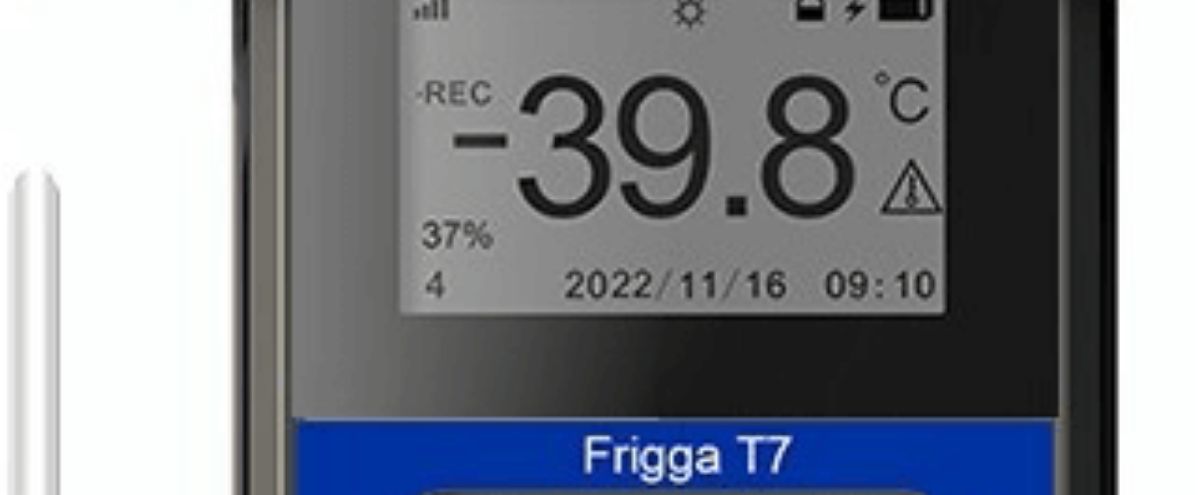
Tempnote’s Frigga platform provides live GPS tracking, temperature monitoring, instant alerts, historical graphs, and cloud-based shipment monitoring. Its Frigga T70 Pro also lists secure PDF and CSV reports, EN 12830 compliance, air-freight compliance, and 21 CFR Part 11 compliance as product features.
Medicines and other temperature-sensitive pharmaceutical products may require controlled transportation conditions. WHO guidance specifically addresses the transport of time- and temperature-sensitive pharmaceutical products.
3PLs and logistics teams can use monitoring data to improve visibility across shipments and provide customers with more useful status information.
Temperature control is also important when transporting foods that require time and temperature control for safety. FDA guidance highlights the need to maintain the transportation cold chain for covered foods.
Medical samples, laboratory materials, and other materials may require careful temperature monitoring during transport.
For organizations with numerous shipments, GPS Cold Chain Monitoring can offer an expanded view of temperature and location data across the transportation process.
Choosing a GPS-enabled temperature data logger should start with your actual shipment requirements.
Check:
WHO guidance also stresses that the monitoring device should be selected according to the intended use and the requirements of the transport operation.
A temperature logger can give you valuable records, but real-time monitoring gives your team a chance to act while the shipment is still in transit.
A GPS Temperature Data Logger brings temperature information and location tracking into one monitoring process. For businesses handling pharmaceuticals, food, laboratory materials, and other temperature-sensitive shipments, that visibility can make shipment review more practical and timely.
If you want to see how real-time temperature and GPS monitoring can fit into your cold-chain process, explore Tempnote’s Frigga monitoring solutions and compare the features with your shipment requirements.
A GPS temperature logger records temperature data during transportation and can also provide shipment location information. Connected models can send data to a remote monitoring platform.
A GPS temperature monitoring device collects temperature data during transit. If the device is supported to do so, it will send the temperature data and location to a web-based application in real time, where users can see the data and location via the Internet.
Because by using a temperature monitoring device, your team can have real-time temperature readings during transportation and can identify potential issues before the shipment reaches its final destination.
Temperature monitoring systems are used by companies in the pharmaceutical, biotech, food, healthcare, and laboratory industries. Also, logistics and air cargo companies use these systems.
Prior to purchasing a temperature monitoring device, evaluate the temperature monitoring range, the accuracy of the sensor, the battery and how long it will last, and how real-time data will be sent. Also, evaluate whether the device can send alerts and report data.