Your cart is currently empty!


Choosing a temperature monitoring device for pharmaceutical shipments is about more than just finding a logger at a low price. The right device should be compatible with your product’s temperature, how long it will be shipped, how it will be shipped, reporting requirements, accuracy requirements, and compliance requirements.
A pharmaceutical shipment can arrive on time and still have a temperature problem. Temperature-sensitive medicines, vaccines, biologics, and other healthcare products can be affected when transport conditions move outside their required range, even if the shipment looks fine when it arrives.
So, how do you choose the right temperature monitoring device for pharmaceutical shipments? The answer depends on more than temperature range alone. You also need to consider shipment duration, recording intervals, accuracy, battery life, reporting, alarms, and whether you need real-time visibility.
Did you know?
Monitoring temperature is an important aspect of providing appropriate conditions for pharmaceutical storage, the World Health Organization says.
Here’s the thing: not every pharmaceutical shipment needs the same type of logger. A single-use device may suit one-way transport, while a reusable or real-time solution may be better for repeated or closely monitored shipments. This guide explains what to check before choosing one.
A pharmaceutical shipment can spend hours or days moving through warehouses, trucks, airports, and delivery points. During that time, temperature can change even when the outer packaging looks completely fine.
The World Health Organization (WHO) identifies temperature data loggers, temperature recorders, electronic shipping indicators, and remote monitoring systems as important tools for monitoring cold-chain conditions. Its guidance also states that temperature monitoring is integral to maintaining suitable pharmaceutical storage conditions.
That is why a temperature monitoring device for pharmaceutical shipments should record useful data throughout transit rather than relying only on a temperature check when the shipment arrives.
Different shipments need different monitoring methods. There is no single device that fits every pharmaceutical supply chain.
A single-use logger can suit shipments where you want a dedicated device for one transport cycle. Tempnote’s T32SU, for example, records temperature from -30°C to +70°C, offers ±0.5°C accuracy, stores up to 32,000 readings, and can generate PDF and CSV reports.
Reusable devices can make sense when your organization sends pharmaceutical products regularly and wants to use the same monitoring equipment across multiple shipments.
The Tempnote TH32 records temperature and humidity, has 32,000-value memory, a replaceable battery, and USB data transfer.
Real-time systems are useful when your team needs visibility while goods are in transit. Instead of waiting until delivery to review the data, connected systems can provide alerts when defined temperature limits are exceeded.
This can matter when the shipment contains high-value or highly temperature-sensitive products.
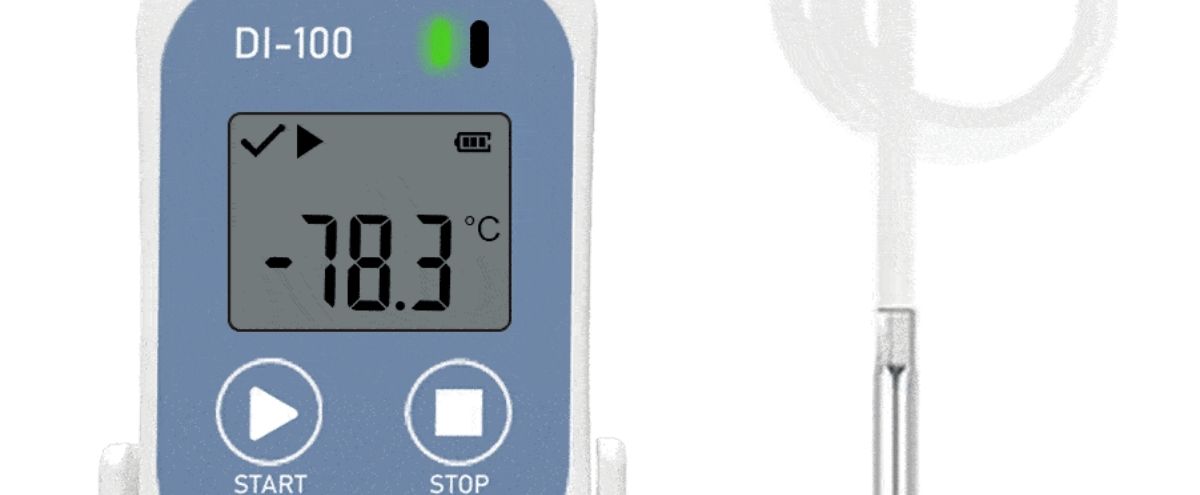
Some products require conditions well below normal refrigerated ranges. In that case, a standard logger may not be suitable. Check the device’s actual operating range before placing it inside a dry-ice shipment.
Here’s the thing: the most impressive specification sheet is not always the best choice. Start with your shipment.
Check the full temperature range your product requires. Then look at the device’s stated accuracy across that range.
A logger designed for ordinary refrigerated goods may not be appropriate for extremely cold transport.
The shorter recording interval will give you more temperature readings, which can help you understand what happened during transit. However, more frequent readings also use memory faster.
WHO listed devices show that logging intervals and memory capacity vary from product to product.
Your unit must be online for the entire monitoring period. Expect delays at airports, customs, warehouses, or distribution centers.
Ask how easily your team can retrieve and review the data.
Useful features can include:
For regulated pharmaceutical operations, also make sure that the device and software support the documentation and data requirements that apply to your process.
A simple comparison can make the decision easier:
| Shipment requirement | Suitable monitoring approach |
|---|---|
| One-way shipment | Single-use temperature logger |
| Frequent shipments | Reusable data logger |
| Need alerts during transit | Real-time monitoring |
| Temperature and humidity matter | Dual-sensor logger |
| Dry ice or very low temperatures | Low-temperature-rated logger |
| Detailed post-shipment review | Logger with downloadable reports |
For example, if you send routine pharmaceutical products by air and only need a record for each shipment, a validated single-use logger may be practical. If your team sends similar shipments every week, a reusable logger may reduce repeated device replacement.
Tempnote states that its monitoring products support pharmaceutical applications and include features such as GDP-focused monitoring, air-freight compliance, validation records, and reporting options.
Before ordering a temperature monitoring device for pharmaceutical shipments, ask:
These questions help you select a device based on the actual shipment rather than buying features you will never use.
The correct temperature monitoring device to ship pharmaceutical products needs to be tailored to your product, packaging, route, and quality needs. Begin with temperature range and delivery time, then verify accuracy, recording interval, memory, battery, alarms, reporting, and compliance.
If you are thinking about monitoring options for pharmaceutical transport, check the available Tempnote devices and match their specifications to your shipment requirements before buying.
It records the temperature conditions during pharmaceutical storage or transport. Depending on the device, it might have downloadable logs, alarms, or real-time notifications.
That depends on the shipment. If you ship one-way, single-use loggers may be a good fit, whereas reusable or real-time devices could be a good fit for repeat or higher visibility monitoring needs.
Temperature records enable teams to determine whether products remained in the conditions they need to be in during storage and transport.
Consider the temperature range, accuracy, recording interval, memory, battery life, alarms, reporting, calibration, and the compliance requirements applicable to your operation.
Yes, but check that the specific device is air transportable and complies with the conditions of your shipment and the carrier.
