Your cart is currently empty!


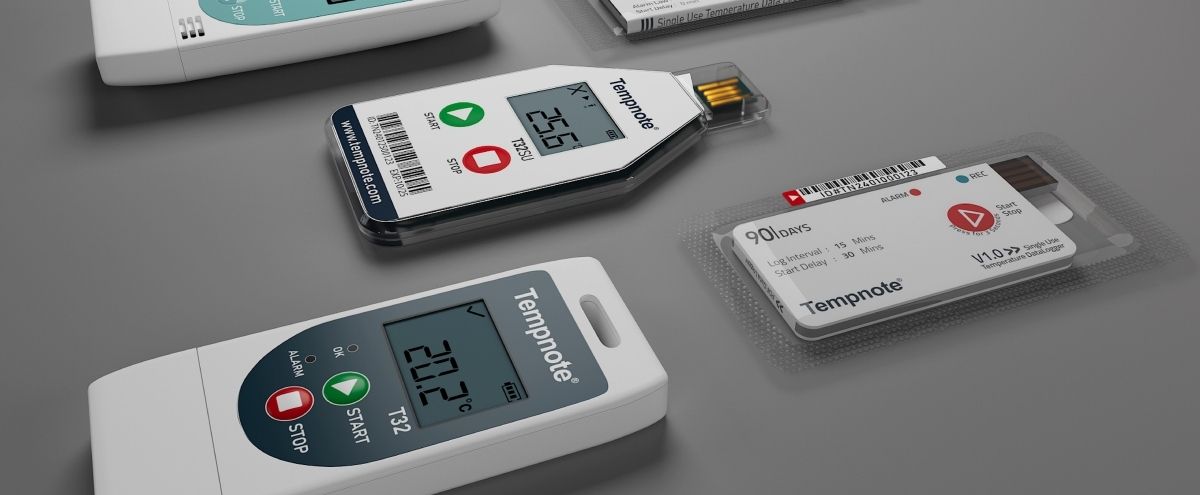
Our goal is simple: help you choose the correct Temperature Monitoring Device for your warehouse. Deciphering factors such as accuracy, recording intervals, alarms, reporting, documentation, placement, and other factors.
A cold storage room can show the right temperature when you check it and still have experienced a temperature excursion several hours earlier. That is why simply looking at a thermometer is not enough when you need a reliable record of storage conditions.
A Warehouse Temperature Data Logger records temperature readings at set intervals, giving you a history that can be reviewed later. For food warehouses, pharmaceutical warehouses, storage facilities, laboratories, and cold chain operations, this information can aid your team in identifying temperature issues and determining if conditions for storage remained within the acceptable temperature range.
A Temperature data logger for warehouse use is an electronic device that measures and stores temperature readings at programmed intervals. A data logger can create a historical record of temperature data that can be downloaded and analyzed at a later time.
A temperature data logger is one of several temperature monitoring devices. These devices can incorporate a sensor, display, alarms, and data storage units that can send data wirelessly. A Temperature recording device focuses on keeping a record of readings over time.
This difference matters. When your warehouse temperature is outside the required range at 2 a.m., a manual check at 9 a.m. may never show what happened. A logger can provide the recorded data needed to review the event.
Cold rooms and warehouses do not always have the same temperature at every location. WHO explains that temperature mapping measures conditions across three-dimensional storage spaces and notes that temperatures can vary within a warehouse. WHO also states that temperature mapping and monitoring are important for suitable pharmaceutical storage conditions.
That makes Warehouse temperature monitoring important for:
It’s important to note that mapping and monitoring are two different things. Mapping helps identify hot and cold areas within a space. Routine monitoring then helps you keep track of conditions during normal operations.
For vaccine storage, the CDC recommends a continuous monitoring and recording digital data logger, with a current calibration report and suitable alarms and recording intervals.
Your Warehouse temperature monitoring system should fit the actual conditions in your facility.
| Feature | Why it matters |
|---|---|
| Temperature range | Must cover your required storage conditions |
| Accuracy | Helps produce dependable readings |
| Recording interval | Determines how often temperature is stored |
| Memory | Controls how much historical data can be retained |
| Alarm | Helps flag high or low temperatures |
| Data access | Makes review and record-keeping easier |
| Calibration records | Supports accuracy checks and quality processes |
| Reporting | Helps your team review and share temperature data |
Do not choose a logger only because it has a long list of features. Start with your storage requirements, then select the features you actually need.
For example, Tempnote’s T32SU lists a -30°C to +70°C temperature range, ±0.5°C accuracy, 0.1°C resolution, 32,000 stored values, customizable recording intervals, high and low alarms, USB 2.0, and PDF/CSV reports. Tempnote also lists EN 12830 certification and a validation certificate for this model.
The best Temperature monitoring device for warehouse use depends on how you operate.
The important question is not, “Which logger has the most features?” Ask instead, “What could go wrong in our storage area, and what data would we need if it did?”
A variety of temperature monitoring data logger formats are available from Tempnote. Its T32SU is a single-use logger with customizable recording intervals, alarms, USB data transfer, and PDF/CSV reporting.
Choosing a model should consider your operation’s temperature range, accuracy, recording period, data accessibility, and documentation requirements. This keeps the purchase based on your actual warehouse requirements rather than marketing claims.
Every morning, a pharmaceutical warehouse manager checks a cold room manually. The displayed temperature is within range, but a refrigeration issue occurred overnight.
With only a manual reading, there may be little evidence about when the issue started or how long it lasted. A properly selected data logger can provide recorded readings across the period, giving the team useful information for its review.
You can also use this approach with a cold-chain client in 2026: rather than making general claims about the product, you should explain its exact use case, provide relevant specifications, and direct readers to the evidence supporting it.
A warehouse temperature Data Logger should be selected based on your storage conditions, products, workflow, and record-keeping requirements, rather than finding a single device that will suit everyone.
Before you buy, make sure to evaluate the temperature range, step accuracy, recording interval, and how you access the data, as well as the calibration or validation documentation.
Looking for a temperature monitoring device for your warehouse or cold chain? See what Tempnote has to offer in their warehouse temperature data logger range. Don’t forget to go through the specifications for our loggers and see if they meet your temperature monitoring requirements before making your purchasing decision.
Temperature data loggers for warehouses keep track of temperature and save it regularly. The logger aids in maintaining records for storage inspections and temperature excursion review.
It assists in capturing temperature fluctuations that could not be noticed in manual or routine reviews. The data recorded helps enhance the quality of reviews and investigate temperature excursions.
A temperature sensor designed for warehouses detects temperature. A data logger keeps temperatures over time. Certain monitoring systems integrate sensors, alarms, recording, as well as remote access to data.
There is no single interval that suits every warehouse. It depends on the product, the storage conditions, the monitoring procedure, and the applicable requirements what setting is appropriate. For vaccine storage, CDC guidance recommends programmable recording at least every 30 minutes.
Temperature monitoring and control systems are required to be implemented to meet the storage and monitoring specifications of the pharmaceuticals and the applicable requirements. Per the WHO, temperature mapping and monitoring are essential components of appropriate pharmaceutical storage.
