Your cart is currently empty!


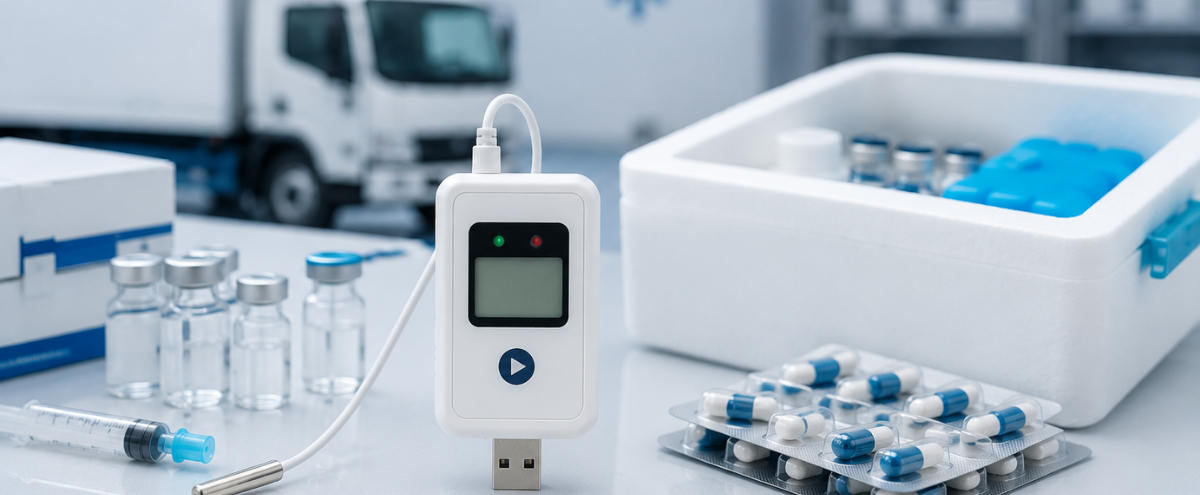
In this blog, you will learn about the importance of monitoring the temperature of medicine storage, selecting appropriate equipment, adapting to changes in temperature, and maintaining reliable records in a hospital pharmacy.
A hospital pharmacy may appear organized to the naked eye, but the lack of proper refrigerator function can easily lead to the significant loss of valuable medicines. Temperature checks in the morning may not reflect what happened the night before.
This is why Hospital Temperature Monitoring is crucial to help pharmacy teams manage storage conditions and identify issues before they go unnoticed. The CDC recommends digital data loggers for vaccine storage because they provide staff the ability to review stored data and identify temperature excursions. The key to the success of a hospital temperature monitoring program is the right equipment and procedural guidance to respond to temperature excursions.
The storage of medicines, including vaccines, may cause them to lose their quality. This is why consistent monitoring of storage temperatures of pharmacy medicines is essential.
Nearly all vaccines and a considerable number of biologic products are temperature sensitive, and if not stored within the limits specified, their quality may be compromised. Each manufacturer specifies a range within which a product may be stored and remain of acceptable quality and this is reflected on the label of the product. The staff must consult the manufacturer’s instructions and/or check the product label to ascertain the storage limits.
Hospital pharmacies should:
For example, a refrigerator may return to its normal temperature after a power cut. That does not automatically mean the medicines inside are still suitable for use. Staff must assess the recorded temperatures and follow the correct procedure.
The right hospital temperature monitoring equipment helps staff see changes that occasional manual checks might miss.
A digital temperature logger records readings at set intervals. Staff can review the stored data to see when temperatures changed and how long they remained outside the required range.
Look for a device with suitable accuracy, a clear record of readings, and calibration documentation.
A wireless data logger can send temperature readings or alerts remotely, depending on the device and its network setup. This can help staff respond when a problem occurs outside normal working hours.
When selecting a temperature monitoring system for healthcare, check for:
The CDC recommends digital data loggers for vaccine storage, with suitable probes, alarms, and current calibration documentation. These recommendations apply specifically to vaccines and should not be treated as universal requirements for every medicine.
Even good equipment cannot replace clear procedures. Your pharmacy needs a routine that staff can follow every day.
This should be based on storage requirements and instructions for the product as well as any local requirements. For vaccines, the CDC recommends continual digital recording of temperature.
This should be based on the manufacturer’s and the monitoring device’s instructions. For vaccine storage, the CDC recommends the buffered probe be placed in the center of the unit.
Correct placement helps staff obtain readings that better reflect the conditions around stored vaccines.
This should be detailed in your SOPs. Staff should be clear on who reviews readings, responds to alarms, and takes action to address the alert. This should be clear for weekdays, evenings, and weekends.
Make sure trained backup staff can take over when the usual person is unavailable.
A temperature excursion occurs when storage conditions fall outside the required range.
When an alarm sounds, or a reading falls outside the approved limits, follow these steps:
Never assume that medicines are safe just because the refrigerator has returned to its normal temperature. Keep affected stock on hold until an authorized person has assessed it and decided what to do.
Temperature records help a pharmacy team to understand what happened and how they responded to the situation. These records help a team to find a recurring fault before it causes more problems.
| Record | Why it matters |
|---|---|
| Temperature logs | Show readings and changes over time |
| Calibration records | Support confidence in device accuracy |
| Excursion reports | Document the event and response |
| Maintenance records | Track equipment faults and repairs |
| Staff training records | Show that employees understand procedures |
Review these records regularly. Arrange calibration and maintenance according to manufacturer guidance and applicable requirements.
For more information about temperature control during storage and transport, link this article to your Hospital Cold Chain Monitoring page.
Use this simple checklist to review your current process:
Choosing monitoring equipment: Tempnote offers temperature and humidity data loggers, including products with alarms and downloadable reports. Check each device’s specifications to make sure it meets your pharmacy’s needs before choosing a solution.
The key to good medical refrigerator temperature monitoring is equipment, consistent checks, procedures, and accurate records. Staff should be aware of what they need to monitor and what action to take when an issue arises in order to be proactive and make decisions regarding the medicines that are likely to be affected.
Evaluate your procedures and fill in the gaps where necessary. Go to Tempnote to see their data loggers and assess the temperature monitoring of your products.
It is the process of recording and reviewing storage temperatures to help keep medicines within their required conditions.
Follow the requirements for each medicine and storage unit. For vaccines, the CDC recommends continuous digital temperature recording alongside routine temperature checks and reviews.
An appropriate digital temperature monitoring device would provide accurate recordings, dependable records, and timely alerts. Use a device that meets your storage needs.
Staff should secure impacted stock, record the occurrence, and notify the responsible pharmacist. For each affected stock, determine product-specific advice on using the stock.
These records help staff examine temperature changes, analyze equipment failures, aid audits, and document changes to corrective actions. Follow laws that govern the retention of records.
