Your cart is currently empty!


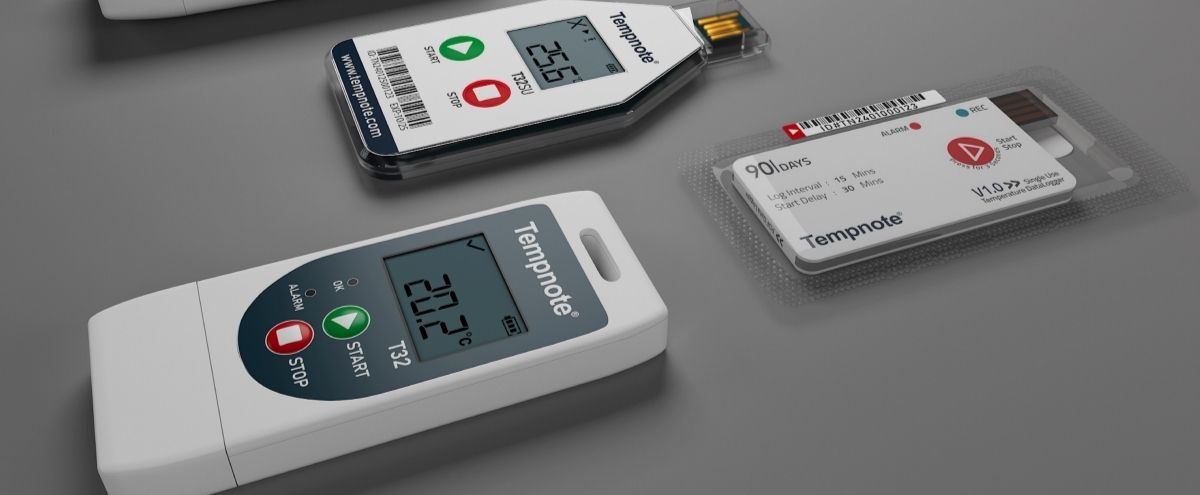
This blog helps you understand the benefits that compact temperature monitoring devices bring to pharmaceutical businesses for recording shipment conditions and documenting the cold chain.
Pharmaceutical products are transported hundreds and, in some cases, thousands of miles to their final destination. During transport, shipments are often stored in warehouses and various other facilities. Even short delays can make time- and temperature-sensitive shipments vulnerable.
A Mini Temperature Data Logger helps businesses record temperature changes throughout transportation. Instead of relying only on a temperature check at dispatch or delivery, your team can review time-stamped readings from the shipment.
According to the World Health Organization (WHO), temperature monitoring during transport is important for protecting time- and temperature-sensitive pharmaceutical products. This makes reliable shipment records an important part of cold chain management.
Let’s look at how these compact devices help pharmaceutical manufacturers, distributors, and logistics teams manage shipments more effectively.
A Mini Temperature Data Logger is a small, electronic device that automatically records temperature at programmed intervals. It can be used to document environmental temperatures during the transport of temperature-sensitive items like pharmaceutical products.
Most devices include:
A USB Temperature Data Logger allows users to retrieve stored information through a USB connection when the model supports this feature.
The transport and storage conditions of pharmaceutical products, including biological products, vaccines, and clinical trial materials, are defined by the product’s manufacturer and can be very strict.
During transportation, temperature changes can occur because of:
The European Commission’s Good Distribution Practice (GDP) guidelines emphasize maintaining suitable storage and transportation conditions for medicinal products. Businesses must also keep appropriate records and investigate temperature deviations.
A temperature record helps your quality team understand what happened during transit rather than relying on assumptions.
Small monitoring devices can make a practical difference when businesses need reliable temperature records without placing bulky equipment inside every shipment.
Here are seven benefits worth considering.
Temperature changes inside shipping packages are governed by several factors. For optimal protection, each shipment should maintain a cold chain. If your shipping package is large or bulky, it may not be able to fully protect the shipping packages it contains.
Compact temperature monitoring equipment offers a practical option for businesses that need to monitor individual consignments.
For example, the Tempnote T32SU weighs approximately 27 grams and measures 99.5 × 49 × 7.8 mm. Its slim design makes it suitable for placement in appropriate shipping packages, subject to the shipment’s monitoring plan.
A major benefit of a Mini Temperature Data Logger is its ability to record readings at programmed intervals.
Instead of checking the temperature only when a package leaves or reaches a warehouse, your team can review readings collected during transit.
This information helps identify:
A USB Temperature Data Logger can simplify the process of retrieving shipment information.
Depending on the model, users can connect the device to a computer and download recorded readings. Some devices also generate PDF and CSV reports.
The T32SU is a model that provides the ability to generate reports automatically and supports connection to a computer via USB 2.0. This function helps the quality team retrieve and retain shipment information without manually entering readings.
Temperature records help quality assurance (QA) teams verify whether a shipment remained within the approved limits.
If there is a recorded deviation, the QA team would review the timing and duration of the deviation and evaluate the potential impact on the product.
The European Commission’s GDP guidelines also require suitable procedures for reporting and investigating temperature excursions during transportation.
A temperature excursion occurs when a product is exposed to temperatures outside its approved storage or transportation range.
For instance, imagine a shipment of temperature-sensitive medicines waiting at an airport because of a flight delay. The temperature-controlled packaging may continue to protect the products, but the quality team still needs evidence of the conditions inside the shipment.
The recorded readings may assist the quality team in deciding if an investigation is necessary.
There can be variance in monitoring requirements for different shipments.
Some businesses may require single-use devices for every individual shipment, while others may manage regular shipments and use the same device for repeated transport.
Make sure the Digital Temperature Logger you are considering meets the temperature range requirements, duration of the record, memory capacity, and reporting requirements.
Recorded temperature information gives businesses a clearer history of shipment conditions.
When a device includes a unique identification number and digital reporting, teams can associate the report with a particular shipment.
This makes it easier to organize records, review delivery conditions, and provide supporting information during internal quality checks.
Portable Temperature Monitoring plays an important role in reviewing conditions across different transportation stages.
Consider a pharmaceutical distributor sending temperature-sensitive medicines from a manufacturing facility to an overseas warehouse.
| Shipping stage | What the logger helps record |
|---|---|
| Packaging | Initial temperature conditions |
| Dispatch | Readings after shipment activation |
| Airport handling | Temperature changes during waiting periods |
| Air transportation | Recorded conditions during the flight |
| Final delivery | Temperature history before receipt |
WHO guidance on time- and temperature-sensitive pharmaceutical products explains the importance of maintaining suitable conditions during storage and distribution.
The important point is that a logger provides evidence of recorded conditions. It does not cool the shipment or prevent temperature changes.
Before purchasing a Small digital temperature recorder, review these important features:
Tempnote T32SU
A single-use logger with a temperature range of -30°C to +70°C, ±0.5°C stated accuracy, 32,000-value memory, and USB connectivity.
View product specifications
Tempnote T32
A reusable alternative with a replaceable CR2032 battery, 32,000-value memory, and the same stated temperature range and accuracy.
View product specifications
Customizable recording intervals and reporting options (PDF/CSV) are supported by both the loggers. Your choice of logger should be based on your requirements for monitoring and shipment frequency.
Follow these three steps before your next shipment:
Step 1: Check product requirements. Ensure the medicine falls within the approved temperature range, and verify the instructions for transportation of the medicine.
Step 2: Configure and position the logger. Check calibration, set recording intervals as required, and activate the logger. Position the logger based on your monitoring requirements.
Step 3: Download the report and send it to your quality team. Check the report to find any deviations, and send a copy to your quality team if any deviation occurred.
Drug shipments require special attention to ensure that they remain at required temperatures. This includes the use of special packaging and the need for constant monitoring of the shipment. In addition to devices that provide live shipment status, compact data loggers provide more data for quality reviews of temperature excursions.
A Mini Temperature Data Logger can support better shipment documentation, traceability, and cold chain monitoring when selected and used correctly.
At Tempnote, we offer single-use and reusable temperature monitoring solutions for businesses that need reliable shipment records.
Planning your next pharmaceutical shipment? Visit Tempnote to review our temperature data loggers and find a suitable monitoring solution for your transportation requirements.
This device is used to take temperature readings at programmed intervals during transportation or storage. The records are used to help review the shipment conditions and investigate the cause of any temperature excursions.
They provide evidence of the condition of the pharmaceutical shipment during transport. Quality teams may then review potential excursions and verify the shipment documentation.
Yes, some of the USB-enabled models can generate PDF and/or CSV reports. The formats available depend on the model of the device.
They can be suitable when their temperature range, accuracy, calibration, and recording features meet the vaccine shipment requirements. Always follow the vaccine manufacturer’s instructions and applicable monitoring guidelines.
Single-use loggers are designed for one shipment, while reusable loggers can be used for multiple monitoring cycles. Your choice depends on shipment frequency, operating procedures, and device specifications.
