Your cart is currently empty!


This blog helps you understand what regulators expect from temperature-controlled medicines, how to monitor them, and what to do when a reading goes wrong.
Let’s start with a quiet problem. Say a vaccine delivery sits in a warm hallway for a couple of hours before anyone puts it in the fridge. The vials look the same. The log says “received.” But the CDC says appearance is not a reliable sign of correct storage, and lost potency can’t be restored. That’s why smart teams pair regulatory compliance consulting with solid monitoring. At Tempnote, we make cold chain monitoring tools, so we’ll keep this practical and plain.
Let’s break it down.
Pharmaceutical regulatory compliance means following the laws and standards for how medicines are made, stored, shipped, and sold. Good Manufacturing Practice (GMP) covers production. Good Distribution Practice (GDP) covers storage and transport.
Cold chain monitoring means measuring and recording temperature at every step, so you can show a product stayed in its safe range. Cold chain regulatory compliance is both together: keep it cold, and keep the proof.
Here’s the thing. Without data, you can’t show what happened. The proof matters as much as the fridge.
Rules vary by country and product, and Sensitech notes that expectations differ between regions. Confirm which ones apply to you. These come up most:
| Rule or guide | What it covers | What it means for you |
|---|---|---|
| EU GDP Chapter 3 and WHO TRS 961 Annex 9 | Storage and transport | You log the deviation, assess risk, investigate, and close it with corrective and preventive action (CAPA). |
| USP storage and transport chapters | Drug storage and shipping | USP says cooling a warehouse afterward to improve an MKT number is not acceptable, since heat damage can’t be undone. |
| CDC Vaccine Storage and Handling Toolkit | Vaccine handling in the US | Specific steps for equipment, records and response. |
| PIC/S GDP guide (via Health Canada) | Environmental control | Brief excursions may be acceptable if stability data back it up. |
Start with the numbers. The CDC says refrigerated vaccines belong at 2°C to 8°C (36°F to 46°F), and frozen vaccines at −50°C to −15°C (−58°F to +5°F).
For vaccine temperature monitoring, the CDC recommends a continuous digital data logger with:
Put the probe in the center of the unit, with product around it. Check and record temperatures twice a day, review the data weekly, and keep records for 3 years unless your state says longer. Calibrate every 1 to 2 years, or as the maker advises.
What should you skip? The CDC doesn’t recommend alcohol or mercury thermometers, chart recorders, or infrared devices for vaccine units.
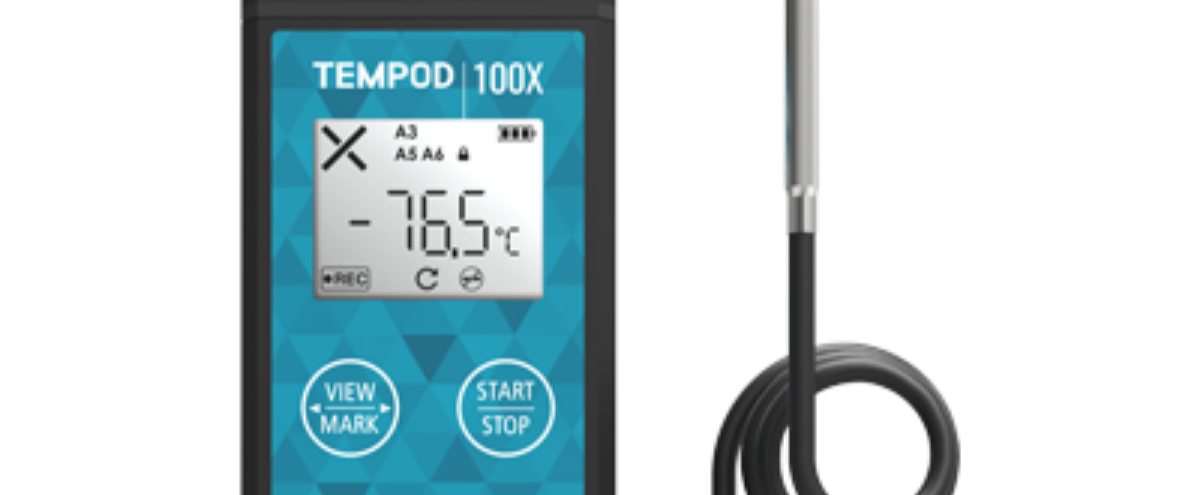
At Tempnote, our product pages list a multi-use TH32 for temperature and humidity and a DI-100 for dry ice that reads from −100°C to +100°C. Both come with a validation certificate. For live alerts in transit, our Frigga real-time loggers report through a web or mobile app, and our software is described as 21 CFR Part 11-ready. Whatever you buy, check that the certificate meets your rules, because the CDC asks for traceable calibration. And keep in mind that a logger records temperature; it doesn’t control it.
One more term: temperature mapping, which means testing how temperature behaves across a storage space. It comes up in GDP Chapter 3.2.1, and the MHRA has said some companies are unclear on what’s expected.
A temperature excursion is any reading outside the range on the product’s package insert. Common causes are weak packaging, transit delays, extreme weather, and human error.
Here’s the CDC’s response, in order:
And here’s a quick guide for common moments:
| What you see | What to do first |
|---|---|
| The alarm keeps going off | Don’t switch it off. Check the door, power, and thermostat. If it continues, move product to a backup unit. |
| The power goes out | Keep the door shut. Record room and unit temperatures, plus the minimum and maximum, when you can. |
| A shipment arrives with a triggered cold chain monitor | Record it, and contact the manufacturer or your immunization program. |
| It all looks fine, but you know something went wrong | Treat it as an excursion. Looks aren’t proof. |
Can you still use it?
That’s not your call alone. Manufacturers look at how far and how long the product was out of range. Mean kinetic temperature can help, but it doesn’t replace root cause work or CAPA.
An FDA Warning Letter: Spotting an excursion and revising an SOP wasn’t enough. The product-impact assessment had to tie temperature data to storage conditions, time periods, and batches.
A freezer failure: A California hospital had to give out more than 800 Moderna doses in two hours after a freezer malfunctioned. The lesson? Have a plan before the alarm sounds.
WHO’s TB medicine shipments: The Global Drug Facility ships temperature-sensitive TB medicines under controlled ambient conditions with data loggers, and asks suppliers for stability data under stress.
What this really means: inspectors want a clear line from reading to batch to decision. That’s where regulatory compliance consulting earns its fee. Someone outside your daily routine checks that the data, the batches, and the decisions line up before an inspector does.
Start-ups hire consultants to build a regulatory strategy, and some companies outsource regulatory affairs entirely. Our rule of thumb: call someone when an audit is close, when you add a product or shipping lane, or when nobody can say who decides if a product is still usable.
Choose carefully. Look for recent, relevant pharma experience, not a generic healthcare consultant. Some bill by the hour, others by project.
The labels regulatory compliance services and pharmaceutical compliance consulting overlap, so ask what you’ll actually receive. Good regulatory compliance consulting should leave you with written procedures your team can follow without the consultant in the room. If you need hands-on help with loggers and paperwork, ask our team. We provide compliance support alongside our loggers.
Cold chain compliance comes down to two habits: control the temperature, and record it well enough that anyone can check your work. Monitor with calibrated loggers, respond to every excursion in writing, and don’t guess. If your setup has gaps, regulatory compliance consulting can close them before an inspector finds them.
And remember where we started: a vaccine can look perfect and still be ruined.
Next step: Compare your setup to the CDC points above. Then book a 15-minute consultation with the Tempnote team, and we’ll show you how our loggers fit your operation.
What does a pharmaceutical regulatory compliance consultant do?
They check your processes against rules like GMP and GDP, build a compliance plan, and help you fix gaps. Some also run regulatory affairs for you.
What is a temperature excursion in pharma?
It’s when a product or storage area goes outside its defined temperature range. It needs a documented investigation.
Does MKT excuse a temperature excursion?
No. MKT can help judge whether the product is usable, but you still need the root cause and CAPA.
What temperature should vaccines be stored at?
Refrigerated vaccines go at 2°C to 8°C. Frozen vaccines go at −50°C to −15°C, per the CDC.
How often should a data logger be calibrated?
Every 1 to 2 years, or as the manufacturer advises. Replace it if it’s no longer accurate to within ±0.5°C.
