Your cart is currently empty!


In this blog, validation is testing the complete packaging setup under realistic and worst-case conditions, recording temperature with calibrated devices, and approving packaging only if the results meet your predetermined criteria.
A shipment can leave the warehouse at exactly the right temperature and still be compromised before it arrives. A delay at the airport, a long wait during handling, or extreme outdoor heat or cold is enough to push a load out of range.
That is why temperature-controlled packaging has to be tested before it carries pharmaceuticals. You need evidence that the packaging holds the required temperature for the full time the shipment is expected to be in transit, and a bit longer in case something goes wrong.
This guide is for pharmaceutical manufacturers, quality assurance teams, packaging engineers, and cold-chain logistics managers. It covers how to define requirements, run thermal tests, use data loggers, and write up the results.
Vaccines, biologics, and some other medicines have to be stored and shipped within specific temperature limits. Even a short time outside the approved range can affect product quality.
Take a vaccine that must stay between 2°C and 8°C. The warehouse is only the starting point. Waiting at an airport, loading and unloading, and the road leg at the end all expose the shipment to conditions the warehouse never sees. Validation checks whether your chosen packaging can handle those conditions.
The World Health Organization publishes guidance on the safe storage and distribution of time- and temperature-sensitive pharmaceutical products, and it is a good place to start your reading.
Use the manufacturer’s approved storage and transport conditions. Typical examples:
These are examples only. The instructions for your product take priority.
Write down the following for each lane:
Only then choose the insulated packaging materials, such as thermal liners, insulated boxes, or insulated pallet covers. Whichever thermal packaging you pick has to suit your route and payload.
| Stage | What to check |
|---|---|
| Planning | Product requirements and shipping route |
| Packaging setup | Insulation and payload arrangement |
| OQ testing | Performance under defined conditions |
| PQ testing | Performance under representative shipping conditions |
| Final review | Test results and approval |
Two ISTA standards come up often. ISTA 20 sets out a design and qualification process for insulated shipping containers. ISTA 7E provides thermal profiles for testing parcel delivery system shipments.
This is the stage where you find out whether the packaging works.
Run the packaging against hot and cold temperature profiles that match your lanes. Include seasonal extremes, the full transit duration, and the worst exposure the route could produce. During each test, watch how the insulation, the pack-out, and the cooling materials behave.
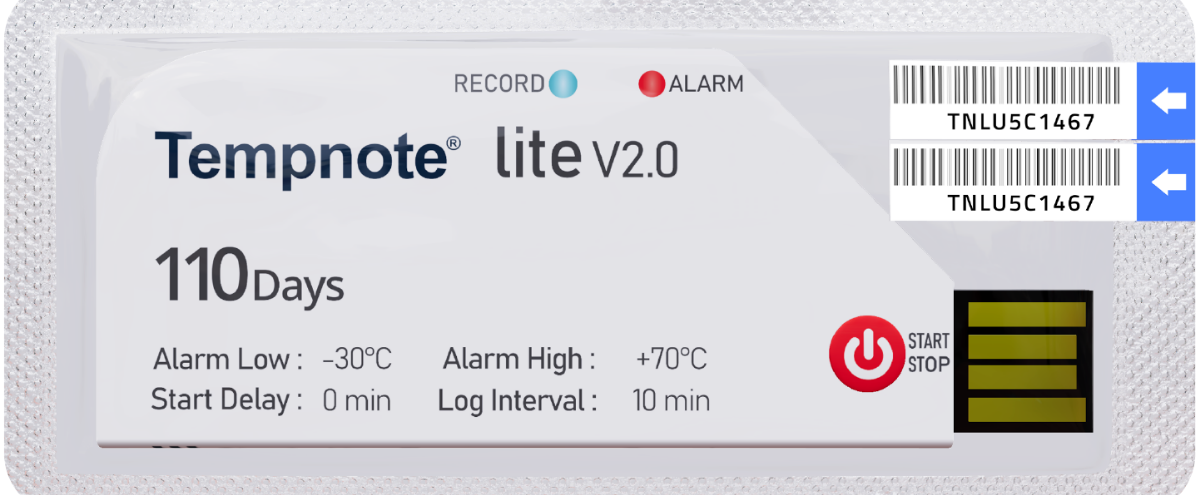
A temperature data logger records readings at set intervals. Put calibrated loggers at several points inside the package or pallet load, because temperature is not uniform across a load.
When the test ends, review:
The FDA’s August 2026 draft guidance also recommends qualifying shipping containers for cold-chain products with temperature recording systems, under expected worst-case temperatures and shipping times. It is a draft and is not binding, so it is not a final regulatory requirement.
Do not approve the packaging until you have reviewed the results against your acceptance criteria. A solid validation report includes:
Approve the packaging only if the results meet the criteria you defined before testing began. Reassess it whenever the shipping route, materials, payload size, or transit duration changes significantly.
Tempnote offers cold chain packaging solutions and monitoring equipment for temperature-sensitive shipments.
Insulation claims alone should never decide which packaging you use. You need documented evidence that the whole system protects your product on your route.
If you want to look at thermal covers or loggers for your shipments, you can explore Tempnote’s Insupod range and data loggers, or contact the team to talk through your cold-chain requirements.
It is the process of testing packaging to confirm that it keeps the product within its required temperature range under defined transport and environmental conditions.
Test the complete packaging configuration under relevant hot and cold conditions. Record temperatures with calibrated devices and compare the results with acceptance criteria you set beforehand.
ISTA 20 provides a design and qualification process for insulated shipping containers. ISTA 7E provides thermal testing profiles for parcel delivery system shipments.
They record temperature changes during transport. Quality teams use the records to spot excursions and to judge whether the shipment stayed within its required range.
After significant changes to packaging materials, shipping routes, product loads, or transport conditions. The company’s own risk assessment should drive the decision.
