Your cart is currently empty!


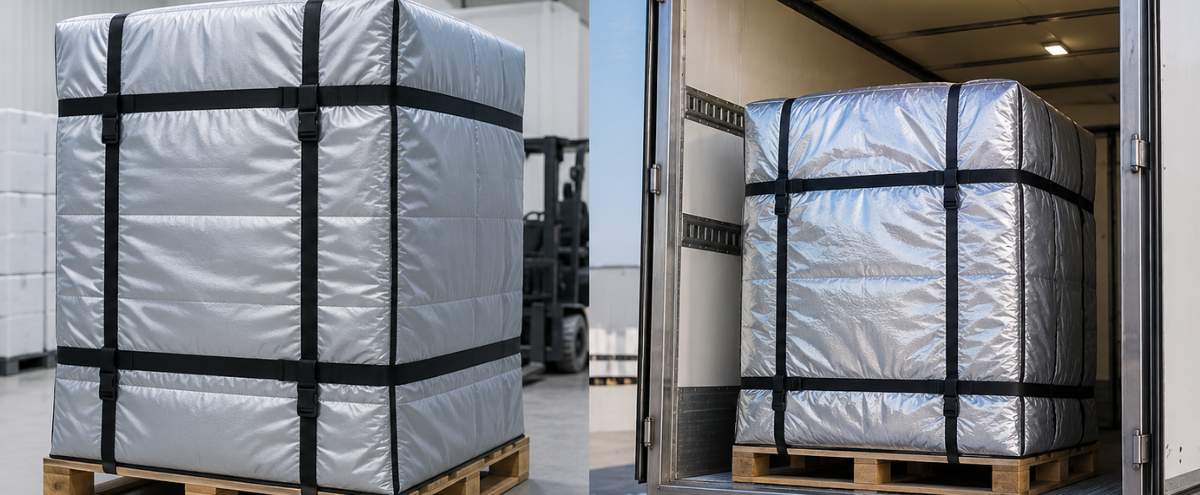
The aim of this blog is to guide you on how thermal container covers shield perishable goods from outside heat and cold during shipping where they help most and how to choose the right one.
How often does a pallet of medicines or fresh fruit sit under open sky for twenty minutes while a truck gets loaded? You may feel a refrigerated vehicle covers every risk, yet a shipment also spends time on docks, airport ramps, and waiting areas where no cooling is running. A container cold cover wraps your cargo in a protective layer for exactly those gaps, so the temperature inside shifts slowly even when the weather outside turns harsh. That matters across temperature-controlled logistics, where one weak moment can undo hours of careful cooling.
In the sections below, we cover what these covers are, how they work, where they help most, and how to choose one that suits your goods.
Thermal container covers are insulated, reflective wraps and liners placed around pallets, drums, boxes, and containers to protect temperature-sensitive cargo while it travels or waits. They work like a jacket for your shipment.
They use layers, each with its job. A shiny outer surface sends sunlight away, while trapped air and tough inner materials make it harder for heat to travel toward your goods.
Refrigerated trucks and cold rooms hold a steady temperature, but cargo has to move between them. Those short gaps are where temperature-controlled container covers earn their place.
Suppose a pharmacy order is packed on a hot afternoon but the truck arrives late. With a cover in place, the pallet gains extra time instead of warming up in the open.
Anything that spoils, weakens or loses quality outside a set temperature band is a good fit, from medicines to fresh fruit.
Start with the temperature your goods need and how long they will be exposed, then match both to a cover grade.
Match the Temperature Band
Match the Exposure Time
Look for covers that reflect light, resist water, and stay secure. A strong container cold cover brings these together in a light package that does not slow your team down.
Strong Sunlight Reflection
Water Resistance for Any Weather
A Tamper Evident Barrier
A cover slows temperature change, but it cannot tell you what your cargo actually experienced. That is why a container cold cover works best when it sits beside refrigerated transport and a data logger.
| Layer of Protection | What It Does for Your Shipment |
|---|---|
| Thermal cover | Slows outside heat and cold around the cargo |
| Refrigerated transport | Holds the planned temperature during the main journey |
| Data logger | Records temperature so you can see what really happened |
| Real-time alerts | Warns your team the moment an excursion occurs |
Tip: Place a logger inside the covered load so the record shows the temperature your goods truly felt.
Moreover, Tempnote’s airline-approved range includes single-use, multi-use, dry ice, and real-time loggers, and Frigga real-time devices send instant alerts when an excursion happens.
Every shipment carries your name, your effort, and your customer’s trust, so it deserves more than luck while it waits on a dock. A well-chosen cover, a planned route, and a reliable logger turn cold chain transportation from a worry into a process you can count on.
If you are ready for the next step, explore Tempnote’s Insupod thermal covers or talk to the Tempnote team about the right grade for your goods, and give your next shipment the steady protection it needs.
How do thermal covers keep perishable goods safe during shipping?
They reflect sunlight and slow heat with layers of foil, air bubbles, and tough film. That buffer helps goods stay near the range they need while they wait or move.
How long does a thermal cover protect a shipment?
Each grade has its own protection time, starting at up to 4 hours for TC100 and TC200 and reaching 8 hours or more for TC500. Longer or hotter waits call for the higher grades.
Can a thermal cover replace refrigerated transport?
A cover cannot take the place of refrigeration, because it only slows temperature change around the cargo. When used together, a container cold cover, a refrigerated vehicle, and a data logger provide both protection and a record in one plan.
Are thermal covers reusable?
Yes, Insupod covers are reusable, foldable, and stackable, so storage and repeat use stay simple. Quick checks between trips help each cover last longer.
What temperature ranges do thermal covers support?
Grades TC100 to TC300 are designed for 15°C to 25°C, and the TC500 grades also support 2°C to 8°C. Insupod covers are validated against 48°C.
