Your cart is currently empty!


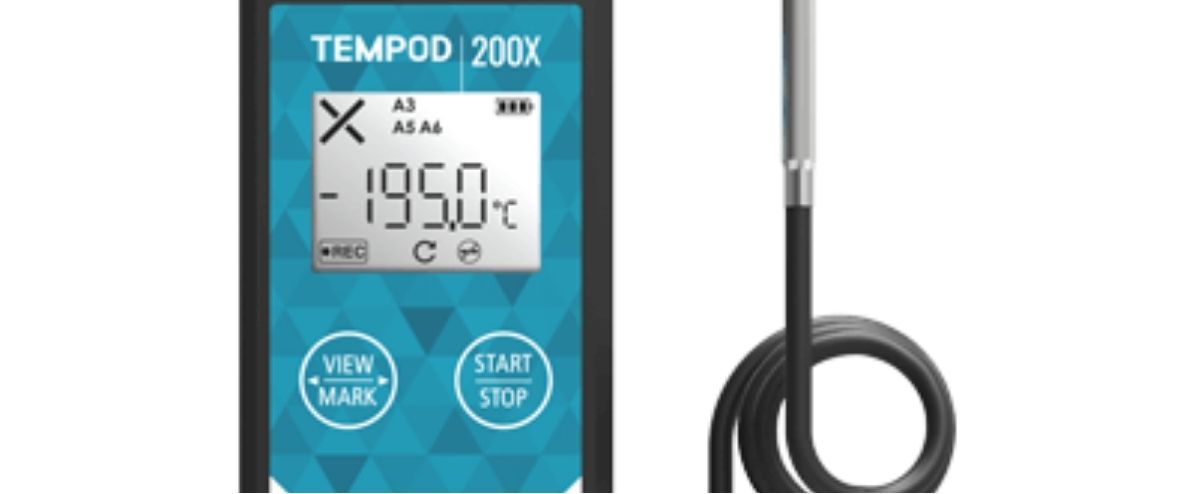
This blog aims to explain how an Ultra Low/LN2 Temperature Data Logger can assist laboratories in monitoring conditions of cryogenic storage, reviewing changes in temperatures, and protecting valuable samples, whilst also ensuring the facilities create and retain adequate records.
What happens to a cryogenic storage system when the temperature changes between routine inspections? Without reliable records, your team won’t know when the change started or stopped.
Cryogenic storage is used across research and biotech to maintain conditions for sensitive materials. A quick stray from approved storage parameters might deserve a second look.
The Ultra Low/LN2 Temperature Logger records temperatures over time. It’s an excellent tool to monitor storage conditions and provide evidence for storage reviews.
Routine storage reviews help verify systems are working as designed. The right tools help your team take corrective action and/or make better decisions when things go wrong.
An Ultra Low Temperature Data Logger is a device that logs, or records, temperature readings over a set period of time. Depending on the design of the data logger, readings may be stored within the data logger or transmitted to a monitoring computer or software for review.
An LN2 Temperature Logger is designed to be used with liquid nitrogen. However, the suitability of the logger would depend on the temperature range of the device, the type of temperature sensor, and how the logger is installed.
Many facilities that use liquid nitrogen for cryogenic storage may have procedures in place for monitoring the temperature of the tanks and the level of liquid nitrogen. The American Society for Reproductive Medicine states that laboratories storing reproductive materials need to establish procedures for the routine monitoring of tank temperatures, as well as the levels of liquid nitrogen.
Manually checking the conditions of the storage system provides useful information. A data logger provides a record of the conditions between those checks.
Some data loggers are programmed to alarm if a condition exceeds a preset limit. The alarm notifies staff of an excursion of the condition and provides staff an opportunity to respond, if the alarm is functioning correctly.
Sometimes, Deviations of the storage condition may occur that require further review to determine the cause of the change. Stored temperature data may provide a record of conditions and support a determination as to the potential impact on the stored sample.
Cryogenic temperature measurement helps laboratories check whether storage conditions remain within approved limits. This matters when working with embryos, reproductive cells, biological specimens, and other sensitive materials.
For example, if a logger records a temperature change overnight, staff can review the time and duration of the deviation before deciding what action to take. They should follow their approved procedures rather than assume every sample has been damaged.
Remember, temperature monitoring and LN2 level monitoring are different tasks. A temperature sensor may not show that a tank has too little liquid nitrogen. The American Society for Reproductive Medicine recommends suitable monitoring, alarms, and written response procedures for cryostorage facilities.
The right device should match your actual storage conditions, not just a product label.
| Feature | What you should check |
|---|---|
| Temperature range | Confirm that the logger covers your required storage temperature. |
| Sensor compatibility | Check whether the probe suits the intended placement and exposure. |
| Accuracy and calibration | Review measurement accuracy and calibration requirements. |
| Recording intervals | Choose an interval that meets your monitoring plan. |
| Alarms and reporting | Check alert options, data access, and report exports. |
Before buying, confirm the manufacturer’s specifications and installation guidance. For example, a logger rated to measure −200°C is not automatically safe for direct immersion in liquid nitrogen.
If a member of staff at a biobank checks a cryogenic tank of valuable biological samples as part of their routine review and notices an atypical temperature.
The staff member should use the loggers’ historical records to note the time at which the change was first noted. The staff member should then ensure that the tank is thoroughly inspected, check the level of liquid nitrogen in the tank, and follow the facility’s standard operating procedure.
This example illustrates that monitoring of cryogenic storage requires reliable data as well as staff who can interpret and act on the data. The logger captures the data, and the staff members decide the best course of action.
Follow these steps to improve your monitoring process:
To enhance your monitoring practice, explore LN2 Temperature Monitoring practices and take into account your system’s capability in supporting the monitoring functions required by the facility.
Continuously monitoring cryogenic storage can help your team build a deep understanding of storage conditions and offer an audit trail of evidence to investigate storage deviations. The right ultra low/LN2 temperature logger can support this process and help you maintain records of storage conditions and investigations.
Check out TempNote’s temperature data loggers to find the right product for your application. Consider the temperature range, sensors, alarms, and reports.
Staff use Ultra Low Temperature Data Loggers to monitor the storage conditions of very cold products. Staff review these records and use them to investigate storage condition deviations.
An LN2 Temperature Logger is used to monitor temperature conditions in LN2 applications and must be able to meet the temperature range of the LN2 and the sensor type required.
Not every standard logger can measure cryogenic temperatures accurately. Always check its rated range, sensor compatibility, and operating limits.
Not unless the system includes a suitable level measurement function. Temperature and liquid nitrogen levels require separate measurements or compatible monitoring equipment.
The frequency is determined by the storage material and system, procedures, and policies. Continuous monitoring may help identify condition deviations.
