Your cart is currently empty!


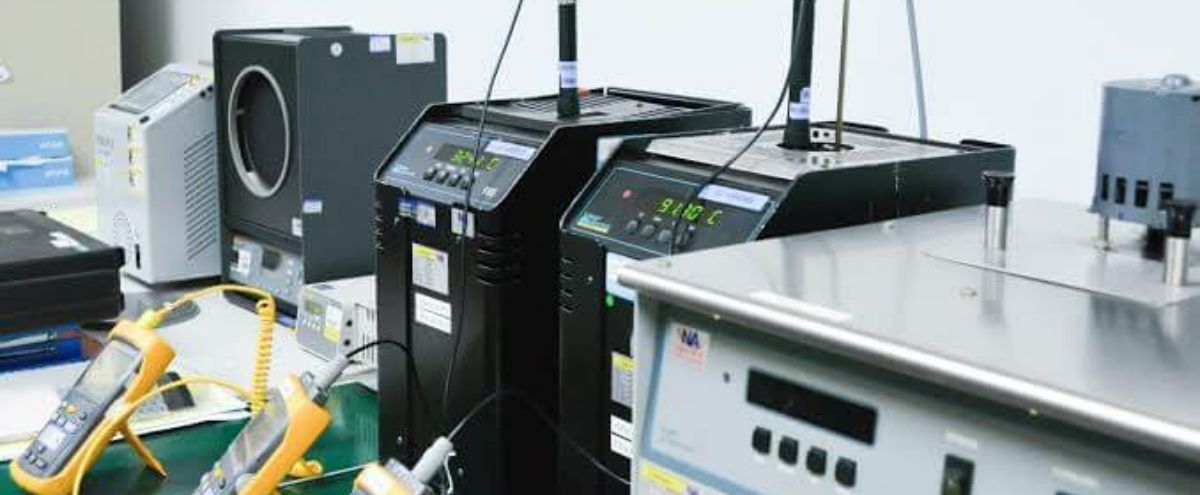
This guide explains how an ISO 17025 calibration lab tests temperature instruments. It covers reference standards, measurement uncertainty, and calibration records. This helps you make better decisions about temperature monitoring.
A temperature reading is only useful when you can trust the instrument producing it. For pharmaceutical shipments, cold storage, labs, food logistics, and other temperature-sensitive uses, small errors can cause poor decisions.
That is where an ISO 17025 Calibration Lab plays an important role. ISO/IEC 17025 sets requirements for competent testing and calibration laboratories. Proper calibration compares an instrument to a suitable reference. It also records the instrument’s measurement performance.
“Metrological traceability requires a documented chain of calibrations to specified reference standards, each contributing to measurement uncertainty, NIST explains.
Tempnote also recommends the use of suitable calibration points and traceable references and the retention of calibration certificates for temperature data loggers. In this guide, we explain how accredited calibration helps ensure accurate measurement, traceability, and reliable temperature monitoring.
ISO/IEC 17025 is an international standard for the competence of testing and calibration laboratories. In India, NABL accredits calibration laboratories against ISO/IEC 17025 and assesses their technical competence.
An ISO 17025 Calibration Lab works within an approved scope and uses documented technical processes, suitable equipment, competent personnel, and controlled measurement practices.
Here’s the important part: accreditation doesn’t automatically cover every service a laboratory offers. NABL states that accreditation does not cover capabilities outside a laboratory’s listed accreditation scope.
So, always check whether the laboratory’s scope covers the temperature measurement you need.
Calibration is not simply checking whether a thermometer turns on. The laboratory compares the instrument with a suitable reference under specified conditions and evaluates the resulting measurements.
A typical process includes:
For example, a temperature data logger designed for use in a refrigerated supply chain must be tested at temperatures typical of its intended use. Testing only at room temperature may not tell you enough about performance across the range you use.
Metrological traceability means a measurement result links to a reference through a documented, unbroken calibration chain. Each step adds to measurement uncertainty. NIST makes another key point: traceability alone does not guarantee a result is fit for its intended purpose.
That distinction is easy to miss.
Suppose your temperature logger reports 5°C. The useful question is not only whether the display says 5°C. You also need to know how the instrument performed against a suitable reference. You must also know the result uncertainty.
This is why a good calibration process considers:
These factors give you stronger evidence when you rely on temperature data for quality or compliance decisions.
A calibration certificate turns the test into documented evidence. Depending on the service and reporting requirements, it can identify the instrument, calibration date, test points, reference equipment, results, uncertainty, and traceability information.
NABL’s accreditation system uses third-party assessments to confirm laboratory competence. NIST defines traceability as a documented chain linking measurement results to appropriate references.
For businesses, this documentation can help keep records of calibration and support internal quality checks.
Tempnote offers NABL Calibration Services for parameters like temperature, humidity, pressure, etc., through NABL-accredited channel partners. Its service information also states that calibration results provide traceability to national standards.
There is no single calibration interval that suits every instrument or application. Your schedule should take into account the manufacturer’s recommendation, history of the instrument, operating conditions, risk, and results of previous calibrations.
You should review calibration when:
For Temperature data logger calibration services, the relevant range and use case matter. A logger used for cold storage has different practical requirements from one used for a process operating at much higher temperatures.
Tempnote’s current V2.0 logger, for example, lists ±0.2°C accuracy over its -30°C to +70°C range. It also includes a validation certificate.
Before sending an instrument for calibration, ask:
| What to Check | Why It Matters |
|---|---|
| Accreditation scope | Confirms the required calibration is covered |
| Temperature range | Matches your actual application |
| Reference standard | Supports traceable measurement |
| Calibration points | Tests relevant operating conditions |
| Uncertainty | Helps you judge the reported result |
| Certificate | Provides documented calibration evidence |
| Instrument ID | Links the certificate to the correct device |
| Calibration history | Helps identify changes over time |
For devices that measure both temperature and humidity, also confirm that the service covers Temperature and humidity calibration within the required ranges.
Imagine a pharmaceutical shipment monitored by a data logger. The recorded temperatures appear acceptable, so the shipment reaches its destination without an obvious warning.
Later, calibration shows that the logger has developed a measurement offset.
The lesson is simple: recorded data is only as useful as the measurement system behind it. Regular calibration helps you understand how your instrument performs before you rely on its readings for important decisions.
A temperature logger can store thousands of readings, but quantity does not ensure the reliability of those readings.
An ISO 17025 Calibration Lab is a lab with controlled procedures, adequate reference standards, recorded results, and uncertainty evaluation to guarantee dependable calibration work. It also depends on whether the scope of accreditation of the laboratory is appropriate for your measurement needs.
If temperature data is critical to your business in cold-chain monitoring, storage, transport, or quality control, then review your instruments, calibration records, and current calibration intervals. NABL Calibration Services for your required measurement range and application, wherever applicable.
It’s an ISO/IEC 17025 accredited calibration laboratory for competence in the scope of accreditation as defined.
Calibration is the process of comparing an instrument with a suitable reference under specified conditions and recording the resulting measurement performance and uncertainty.
The interval should follow the manufacturer’s guidance, past calibration results, operating conditions, risk, and your quality system requirements.
It may include instrument identification, calibration points, results, calibration date, reference information, uncertainty, and traceability information.
Traceability gives a written chain that links a measurement result to a proper reference. It also includes uncertainty at each step in the chain.
