Your cart is currently empty!


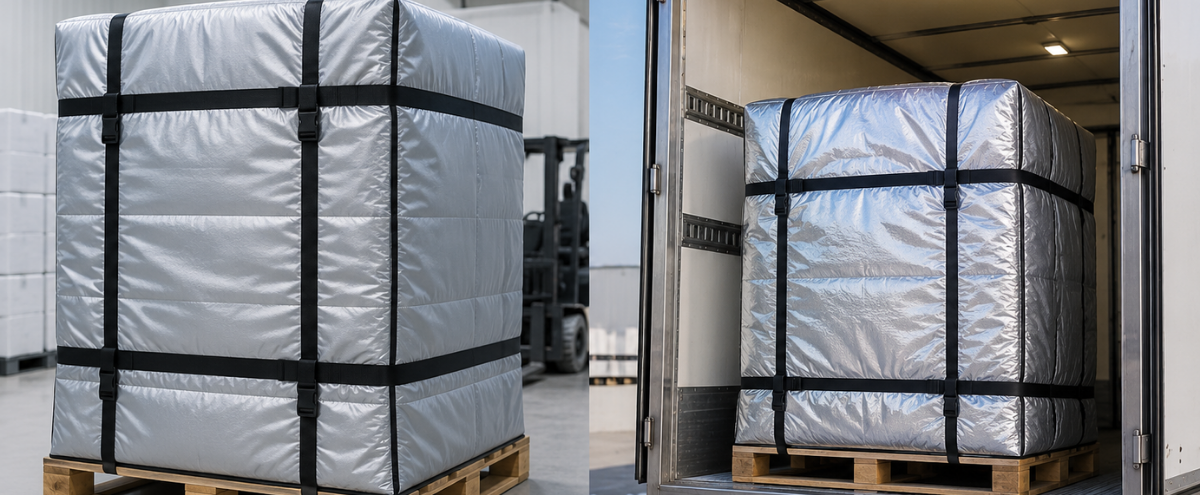
This guide explains how Thermal Shipping Solutions work, helps potential customers compare thermal shipping solutions to active temperature-monitoring systems, and provides a checklist for determining the most appropriate shipping solution.
A temperature-sensitive shipment does not stop being at risk once it leaves your warehouse. Heat during loading, cold during transit, airport delays, or time spent on a loading dock can affect products that must stay within a specific temperature range. That is why choosing the right Thermal Shipping Solutions matters for pharmaceuticals, food, life sciences, and other temperature-sensitive goods.
Did you know?
The Centers for Disease Control and Prevention (CDC) recommends the use of digital data loggers for routine transport and storage of vaccines.
It is important to evaluate thermal shipping solutions and combining use of thermal shipping solutions, temperature monitoring solutions, and appropriate insulation. We describe various thermal shipping systems and provide a thermal shipping solution assessment checklist.
Packages and services that protect temperature-sensitive products during transit are thermal shipping solutions. Thermal solutions may include covers and containers, refrigerants, and temperature-monitored shipping services.
Here’s the thing: thermal protection and temperature monitoring do different jobs.
Thermal packaging helps reduce the effect of outside temperature changes. A temperature data logger records what happened inside the shipment.
That difference matters. The World Health Organization says shipping systems for time- and temperature-sensitive pharmaceutical products should be qualified before use and that temperature and humidity monitoring systems form an important part of transport operations.
The CDC also recommends digital data loggers for vaccine storage and transport and provides temperature logs for refrigerated and frozen transportation.
There is no single package that works for every shipment. The right choice depends on the product, required temperature range, transit time, and route.
| Shipping option | Best suited for | Main benefit |
|---|---|---|
| Thermal pallet cover | Pallet shipments and short exposure | Reduces external temperature impact |
| Insulated shipper | Smaller sensitive shipments | Adds thermal protection around the product |
| Gel packs or phase-change materials | Controlled-temperature shipments | Helps maintain a set temperature range |
| Dry ice system | Products requiring very low temperatures | Supports frozen transport |
| Refrigerated transport | Longer or controlled shipments | Active temperature control |
| Data logger | Most monitored shipments | Records temperature conditions |
Tempnote’s Insupod thermal covers include models designed for 15°C to 25°C and 2°C to 8°C applications. Its listed models include protection of up to 4 hours or 8+ hours, depending on the model. The covers are designed for Euro/ISO pallet sizes and can also be supplied in bespoke sizes.
That makes thermal covers useful when you need an extra barrier against external heat or cold during transport. They should not, however, replace a validated temperature-control process when the product requires tighter control.
Imagine a pharmaceutical pallet arriving after a delayed flight. Packaging appears intact, but there is no way of knowing whether the shipment stayed within its parameters.
This is where monitoring earns its place.
A temperature data logger can record conditions throughout transport. Depending on the device, your team may then review the recorded data and check for temperature excursions.
The CDC defines a temperature reading outside the recommended range as a temperature excursion and provides specific procedures for documenting and handling such events.
Tempnote provides temperature and humidity data loggers, including real-time monitoring options, and positions its monitoring systems for pharmaceuticals, food, life sciences, and logistics.
Thermal protection and monitoring provide both protection and evidence for highly valuable or sensitive cargo.
Before choosing between thermal shipping systems, ask five practical questions:
Start with the product specification. A shipment requiring 2°C to 8°C has different needs from one requiring controlled room temperature.
A four-hour exposure and a two-day international shipment should not use the same assumptions.
Airports, loading docks, customs, vehicle transfer, and outdoor exposure must all be considered.
Temperature data provides excellent evidence when something goes wrong in a shipment of sensitive products.
WHO guidance recommends using actual temperature data from representative transport routes to understand temperature risks and support packaging qualification.
This is one of the most useful lessons in cold chain logistics: don’t select packaging based only on its insulation. Look at the complete transport process.
Consider a distributor shipping temperature-sensitive pharmaceutical products from a warehouse to a customer several hours away.
The team first confirms the required temperature range. Next, the package is selected according to its thermal characteristics, a temperature data logger is added, the transit time is checked, and the route for heat exposure is reviewed.
If the shipment arrives without an obvious problem, the team can still review the recorded temperature data.
If an excursion appears, the quality team can follow its established procedure and assess the product using manufacturer and regulatory guidance.
That process supports better temperature control because decisions rely on recorded conditions instead of guesswork.
Good cold chain shipping solutions should cover more than the box or cover around your products.
Use this simple process:
According to WHO recommendations, route profiling helps determine temperature risks, which enables firms to evaluate their shipping process against real-life transportation.
The best Thermal Shipping Solutions are not simply the ones with the most insulation. They are the systems that match your product, temperature range, transit time, route, and monitoring needs.
Tempnote combines thermal covers with temperature monitoring products designed for cold-chain applications, giving businesses options for both physical protection and shipment records.
If your team is reviewing its shipping process, start with the five questions above. Then assess your actual route data before selecting packaging or monitoring equipment.
CTA:
Need help selecting the right cold-chain monitoring and thermal protection approach? Review Tempnote’s cold-chain products and speak with its team about your shipment requirements.
One size does not fit all. Choose packaging that fits the product’s required temperature range, length of transit, conditions of the route, and level of protection.
Follow written procedures for handling, monitor temperatures, maintain temperature conditions during transport, and provide appropriate thermal protection.
A data logger monitors the temperature conditions during transport. It can also help your team to find excursions and look back at what happened during a shipment.
Thermal packaging helps to limit the impact of outside temperatures. The monitoring equipment measures and records the temperature the shipment experiences.
First, evaluate product range, transit time, route, and packaging performance. Then regularly monitor and review shipment data using the appropriate tools.