Your cart is currently empty!


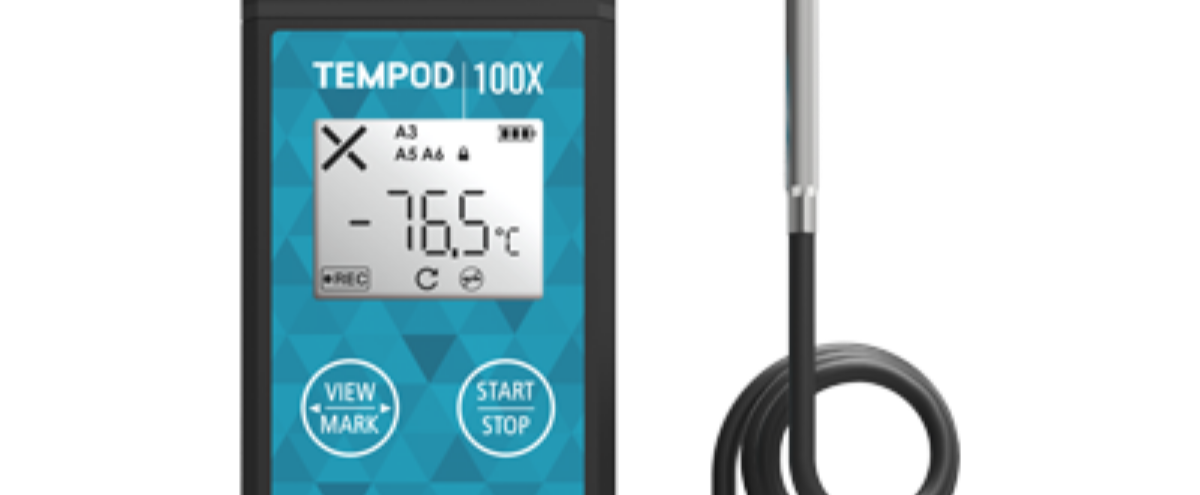
Our goal is to explain why this type of logger is useful for shipment monitoring and how to tell if its specs are right for your shipping needs.
When a temperature-sensitive shipment arrives, knowing that it reached its destination is only part of the job. You also need to know what temperature it experienced along the way. A suitable temperature monitoring device can give your team a clear record of conditions during transport, which matters when products must stay within a defined temperature range.
For pharmaceutical, life sciences, dry ice, and cold chain shipments, the right data logger should match the actual shipping conditions. That is where TempSen 90S can be considered for very low-temperature applications.
A shipment can face temperature changes during loading, air transport, customs delays, storage, or final delivery. Without recorded data, it can be difficult to know whether the shipment stayed within its required range.
The CDC recommends digital data loggers for monitoring vaccine temperatures and notes that recorded data can help show the duration of a temperature excursion. Its current 2026 guidance also stresses proper monitoring equipment, calibration records, and clear procedures for out-of-range readings.
Here’s the thing: packaging helps maintain the required conditions, but a logger gives you evidence of the conditions during transport.
Before choosing a TempSen 90S temperature logger, start with your shipment rather than the device.
Check these four points:
This simple check can prevent you from selecting a logger that does not fit the actual shipping process.
The TempSen 90S data logger is listed with a measurement range of −90°C to +70°C, making its specification relevant to very low-temperature shipments, including dry ice applications. With a 0.1°C resolution, it has 0.5 °C accuracy from 30°C to +30°C, 0.7 °C accuracy from 90°C to +70°C.
Its memory stores 28,800 values, while the logging interval can be configured between 1 minute and 2 hours. Battery life is listed at up to 30 days, so you should compare that period with your expected shipping time before use.
The unit includes high and low alarms with five alarm ranges and an LCD. It also uses USB 2.0 and can produce an encrypted PDF report containing embedded raw data. The product listing also states factory NIST-traceable 3-point calibration and lists CE, RTCA-DO160G, and IATA PI970 II certifications.
These features matter when your team needs more than a simple pass/fail indication.
A practical example is a life sciences company sending temperature-sensitive material in a dry ice shipper by air. Before dispatch, the team can confirm the required temperature range, expected time in transit and logging interval. After delivery, the recorded data can be viewed to observe the temperature history of the shipment.
The same thinking applies to pharmaceutical logistics, biological samples, international freight, and other temperature-sensitive shipments where temperature records are part of the receiving process.
Use this simple process:
Step 1: Confirm the product’s required temperature range.
Step 2: Estimate the full shipping period, including possible delays.
Step 3: Determine how often you need temperature readings.
Step 4: Check your documentation and quality requirements
Step 5. Make sure that logger specs and certifications are suitable for your particular shipping process.
Do not assume that one logger is right for every shipment. Your product requirements should come first.
| What you need | What to check |
|---|---|
| Very low-temperature monitoring | Measurement range |
| Detailed shipment history | Memory capacity |
| Excursion review | Alarm settings |
| Quality records | PDF and raw data |
| Longer shipments | Battery life |
| Air freight use | Relevant certifications |
Air freight use Relevant certifications
Reliable shipment temperature monitoring starts with choosing equipment that fits the conditions you actually expect. For very low-temperature applications, TempSen 90S offers a −90°C to +70°C range, configurable logging, stored readings, alarms, and downloadable reporting.
Before you choose any temperature monitoring device, compare its specifications with your product requirements, transit time, packaging process, and quality procedures.
Ready to review your shipment monitoring needs?
Check the available temperature data logger options from Tempnote and compare the specifications with your next shipment.
It is a single-use temperature data logger designed to record temperature during transport and other low-temperature monitoring applications.
The listed measurement range is −90°C to +70°C, with 0.1°C resolution.
The device can store up to 28,800 temperature values at logging intervals ranging from 1 min to 2 hours.
Yes. The product supports USB 2.0 and can generate an encrypted PDF report containing embedded raw data.
No. Always compare the logger’s temperature range, monitoring period, data needs and shipping requirements to your specific shipment.