Your cart is currently empty!


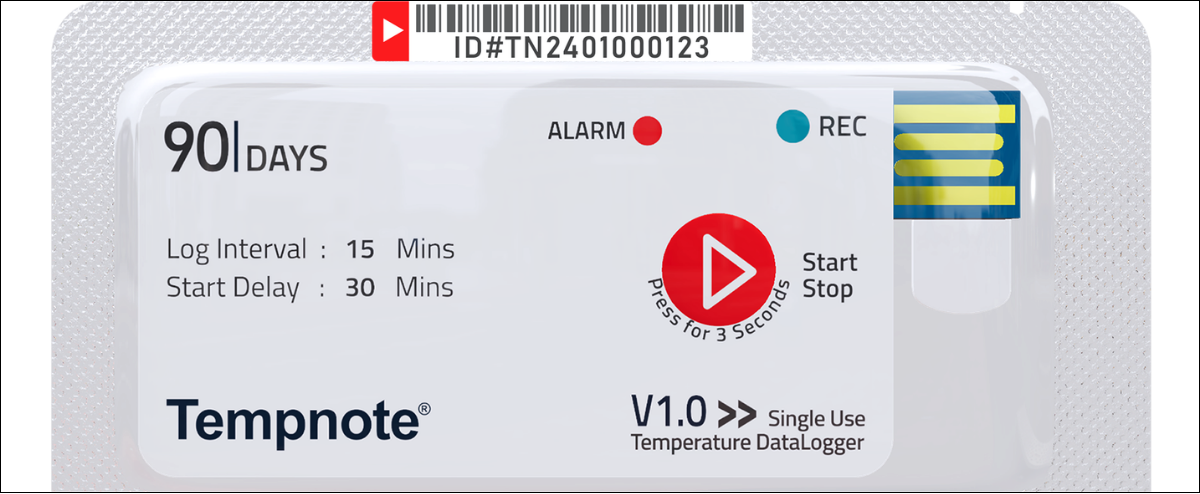
The objective of this blog is to help you to understand the benefits of single-use temperature monitoring devices and the key considerations when selecting a device, from the perspective of pharmaceutical manufacturers, distributors, 3PL service providers, and quality assurance.
Key Takeaways
Temperature changes can occur during shipping, transit delays, and transfers even when pharmaceuticals are loaded in the right conditions. For temperature-sensitive products, knowing the temperature at dispatch is not enough. You also need a reliable record of what happened during transportation.
This is where a Disposable Temperature Data Logger comes in handy. It records the temperature at set intervals throughout the course of the shipment, providing your quality and logistics teams with a clear record to review upon delivery. WHO recognizes cold chain monitoring devices, including data loggers and temperature recorders.
Did you know?
Temperature mapping and temperature monitoring are inherent to maintaining proper pharmaceutical storage conditions according to WHO’s 2026 guidance on cold chain.
In this guide, we explain the function of disposable loggers, why they are important, and what you should look for before choosing one for your pharmaceutical shipments.
Pharmaceutical shipments may utilize temperature data loggers as part of their cold-chain monitoring system. The type of temperature monitoring data logger used is determined by the transport system and the conditions to be monitored.
Single-use loggers are beneficial when logistics require the data logger to travel with a shipment and return is not feasible. This is common for international shipments.
Pharmaceutical products, vaccines, biologics, and other temperature-sensitive products can have specific storage requirements. A shipment may experience a temperature change even when the packaging and transport plan were correct.
WHO’s January 2026 cold-chain resource states that temperature mapping and temperature monitoring are integral to appropriate pharmaceutical storage conditions.
A Single Use Temperature Data Logger helps your team create a record that can be reviewed after transport. If a shipment experiences an out-of-range event, the recorded information can help your quality team understand when it happened and assess the event against the product’s approved requirements.
This is important because an excursion does not automatically mean that a product must be discarded. Your quality process should determine what action is appropriate based on the product and the recorded conditions.
Here’s the thing: the value is not simply in measuring temperature. It is in having usable information tied to a specific shipment.
A Single-Use Temperature Logger can remain with the shipment from dispatch to delivery. Your team does not need to plan a return route for the device.
Depending on the model, you can retrieve stored readings and create reports for quality review and documentation.
Recovering reusable equipment from different locations can be an additional operational challenge for distributors and 3PL providers. A single-use model removes that step from the process.
A recorded history can show whether temperatures stayed within a certain range or when they went out of range. CDC guidance similarly emphasizes continuous recording devices for vaccine temperature monitoring and documentation.
The right choice depends on how your shipments move and how your monitoring process is set up.
| Consideration | Single-Use Logger | Reusable Logger |
|---|---|---|
| Device return | Usually not needed | Required |
| Shipment pattern | Useful for one-way routes | Useful for repeat routes |
| Device rotation | Minimal | Must be managed |
| High-volume shipments | Simple deployment | Requires inventory planning |
| Long-term reuse | Not the main purpose | Designed for repeated use |
For a fixed route between two facilities, a reusable unit may fit your process. For a shipment traveling to a distant or changing destination, a Disposable Temperature Monitoring Device may reduce equipment-recovery work.
Do not select a logger based only on price. Check whether its specifications match your actual shipping requirements.
Look at:
For example, the Tempnote T32SU is listed as a single-use/disposable logger with a -30°C to +70°C measurement range, ±0.5°C accuracy, 32,000 stored values, customizable recording intervals from 10 seconds to 18 hours, USB 2.0, PDF and CSV reports, high and low alarms, and EN 12830, CE, and RTCA-DO-160G certifications. Its product information also lists a validation certificate.
Let’s say that your company sends temperature-sensitive pharmaceuticals to a partner overseas.
Before dispatch, the logger is started and placed according to your established monitoring procedure. During transport, it records temperature at the selected intervals. After arrival, your team retrieves the data and reviews the temperature history.
If the shipment experienced a delay and temperatures changed during that period, the record gives your quality team useful information for its review.
That is what Temp Note should do: provide evidence about the conditions the product experienced. It should work alongside qualified packaging, proper storage, trained staff, and appropriate transport procedures.
Good pharmaceutical logistics is not only about moving products from one location to another. You also need reliable records that help your team understand the conditions during transport.
A Disposable Temperature Data Logger is a system to monitor shipment temperature, requiring little to no maintenance after the shipment has been made. Prior to using the device, ensure the range, accuracy, and other parameters of the device meet your requirements.
Tempnote’s T32SU cold-chain monitoring system provides USB data access, automatic PDF and CSV reporting, configurable recording intervals, and a stated record period of 300+ days.
Ready to review your pharmaceutical temperature-monitoring process? Compare your current shipment requirements with the available Disposable Temperature Recorder specifications and choose a device that fits your quality and logistics workflow.
It is a device that records a series of temperature data during product storage or transit. The data is stored in the logger and is retrieved at the end of the storage or transit period.
Loggers help in capturing the transport conditions and assist Quality Function Deployment (QFD) team members in evaluating out-of-control (O.O.C.) conditions. Temperature loggers are a replacement for electronic devices used in the transport and storage of pharmaceutical products.
Disposable temperature loggers are used for a single shipment, while a reusable temperature logger is used for multiple shipments.
No. A logger is a recording device. Other means should be in place to control storage, transport, and product conditions.
Some of these are the logger’s operational temperature range, the accuracy of the logger, the logging interval, the memory of the logger, the output method of the logged data, the validity of the logger, and the battery life of the logger.