Your cart is currently empty!


When you rely on temperature data to protect medicines, food, samples, or other temperature-sensitive products, accurate readings matter. This guide will explain ISO 17025 calibrating, why temperature monitoring devices need calibration, what you should look for in a service, and how records of calibration can help your quality process.
When your temperature data is used to protect medicines, laboratory samples, food, or other temperature-sensitive products, measurement accuracy matters. A data logger can record temperatures throughout storage or transportation, but simply having a record does not tell you how closely those readings reflect the actual temperature. That is where the Best ISO 17025 calibration becomes important.
Calibration is the process of comparing the performance of an instrument with a suitable standard and recording the results. ISO/IEC 17025 sets out the general requirements for the competence, impartiality, and consistent operation of testing and calibration laboratories. If your organization needs accurate temperature records, choosing the right calibration method will help you make better quality and monitoring decisions.
Why this version works: it opens with the reader’s real problem, introduces the primary keyword naturally, defines the topic without sounding like a textbook, and supports the ISO/IEC 17025 claim with an authoritative source. It also avoids making the unsupported claim that every calibrated instrument is automatically fit for its intended use. NIST specifically notes that traceability alone does not guarantee fitness for purpose because the uncertainty must be suitable for the measurement need
ISO 17025 calibration refers to calibration performed by a laboratory working to the requirements of the ISO/IEC 17025 standard, the international standard for testing and calibration laboratories.
ISO states that the standard covers laboratory competence, impartiality, and consistent operation. It is used by accreditation bodies when assessing and accrediting laboratories.
Here’s the thing: ISO/IEC 17025 does not mean that a temperature data logger itself is ISO 17025 certified. The standard applies to the laboratory and its calibration activities.
For your team, this matters because reliable temperature records depend on more than simply collecting readings. You also need confidence in the equipment producing those readings.
Temperature sensors and data loggers can experience measurement changes due to age, use, handling, or operating conditions. Calibration gives you a way to check instrument performance against a suitable reference.
This becomes especially important when temperature records support decisions involving:
NIST materials on temperature measurement also address calibration, traceability, accreditation, and measurement uncertainty, showing why these factors matter when reliable temperature results are required.
For example, a logger may record a complete shipment history, but complete data alone does not prove that every reading was accurate. Measurement accuracy is part of the bigger quality picture.
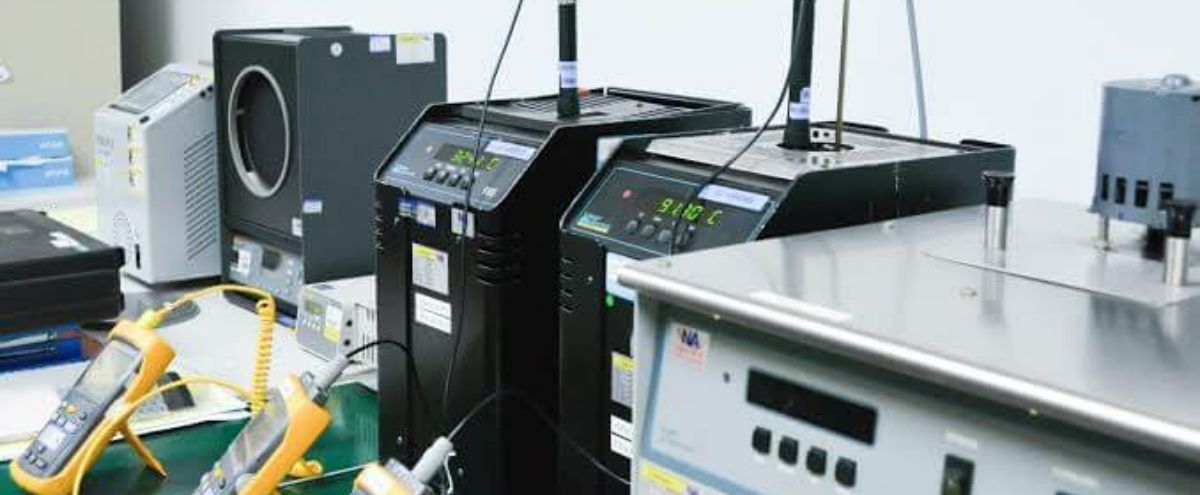
Depending on the laboratory’s scope, Temperature calibration services may cover different types of measurement equipment.
Common examples include:
Your required temperature range also matters. Current Tempnote products cover several ranges. For example, its V1.0 logger is specified for -30°C to +70°C with ±0.5°C accuracy, while its DI-100 is specified from -100°C to +100°C, with different accuracy specifications across that range.
That difference is important when selecting Data logger calibration services. A laboratory must be able to support the range and measurement requirements relevant to your equipment.
A typical calibration process can be understood in four simple steps.
The laboratory records details such as the model, serial number, measurement range, and calibration requirements.
The equipment is checked against an appropriate reference under defined conditions.
The results can show the instrument’s indication, reference value, difference, and relevant measurement uncertainty.
The final documentation should clearly identify the equipment and report the applicable calibration results and supporting information.
This is where Calibration laboratory services become important. You are not simply paying for a test; you are obtaining documented information about the performance of measurement equipment.
Use this quick checklist before selecting a provider:
| What to Check | Why It Matters |
|---|---|
| Laboratory accreditation | Shows that the laboratory has been assessed against applicable requirements |
| Accreditation scope | Confirms the laboratory covers the measurement you need |
| Temperature range | Ensures your required range is supported |
| Measurement uncertainty | Helps you understand the uncertainty linked to the result |
| Calibration certificate | Provides documented calibration results |
| Traceability information | Helps establish the measurement chain |
If you are looking for NABL calibration services, check the laboratory’s current NABL accreditation and, importantly, its specific scope. Do not assume that every service offered by an accredited laboratory is automatically covered by its accreditation.
Calibration is the process of measuring an instrument’s performance against a reference.
Validation is more broad. It is used to determine that a process, system, or equipment functions as intended for its intended use.
This difference is useful when reviewing temperature monitoring systems. A product can have a manufacturer’s validation certificate while your organization may still have its own calibration, qualification, or quality requirements.
Tempnote’s published product information includes validation certificates and reporting features. Its V1.0, TH32, and DI-100 models, for example, provide temperature monitoring with specified measurement ranges and generated PDF or CSV reports.
Suppose you use a temperature data logger during a pharmaceutical shipment.
The logger records temperatures throughout the trip and produces a report. That report tells you what the device recorded. Calibration gives your quality team additional information about how the instrument performs against a reference.
If a reading is close to a critical temperature limit, that distinction can matter. You want your team to base decisions on measurement data whose performance has been properly evaluated.
Good temperature monitoring starts with the right equipment, but trustworthy monitoring does not stop at data collection. Your team also needs to understand how that equipment performs and whether its calibration meets your quality requirements.
ISO/IEC 17025 is a framework that provides a standard for calibrating laboratories. The right scope of calibration, measurement range, uncertainties, and documentation will help you determine if a calibration service meets your needs.
If your organization uses temperature data loggers for pharmaceutical, cold-chain, laboratory, food, or other temperature-sensitive applications, review existing calibration requirements and equipment specifications before choosing a provider.
“
Explore Tempnote’s data loggers and speak with our team about the equipment and documentation your application requires.
ISO 17025 refers to the calibration of a testing or calibration laboratory that meets the requirements of ISO/IEC 17025. The standard provides confidence in the calibration results from the laboratory.
No single interval will work for all loggers. Your schedule must take into account: equipment stability, use, environment, risk, manufacturer’s guidance, and your quality procedures.
The equipment should be clearly identified, and the relevant information, including calibration results, conditions, and measurement uncertainty, should also be given.
No. Validation is the process of ensuring that a system, equipment, or process is fit for its intended purpose. Calibration is the use of a standard to compare measurement performance.
Accurate measurements help you make better-informed decisions about whether temperature-sensitive products were maintained within required conditions.
