Your cart is currently empty!


Our goal is to help you understand how wireless temperature data loggers positively impact cold chain monitoring through continuous temperature logging, remote visibility, automated alerts, and rapid response to temperature excursions.
A cold chain does not stop being at risk just because a shipment is inside a refrigerated truck, container, or insulated package. Temperature can change during loading, unloading, storage, transit, or delivery.
That is why knowing the temperature after a shipment arrives is not always enough. The CDC recommends digital data loggers for continuous temperature monitoring in vaccine storage and notes that these devices provide details about how long temperatures remained outside the recommended range.
A wireless temperature data logger takes this idea a step further by allowing temperature information to be sent remotely, where supported. Instead of only asking, “What happened?”, your team can get a clearer view of what is happening during transit.
A wireless temperature data logger is a device that measures and records temperature at set intervals and can transmit that information through supported wireless or cellular technology.
A typical system works like this:
Temperature sensor → data logger → wireless network → cloud platform → dashboard and alerts
Temperature data becomes available while your goods are in transit, rather than after the loggers have been retrieved.
For example, a pharmaceutical distributor sending temperature-sensitive products across several locations can use remote monitoring to review shipment conditions while the delivery is still moving.
The logger records temperature at programmed intervals. This creates a time-stamped temperature record as opposed to capturing a single temperature at some point in time.
Data record temperature alerts can be coupled with monitoring systems that can send email/SMS alerts to a team when temperature thresholds are crossed.
Modern systems place temperature records on a cloud platform, allowing authorized users to remotely monitor and review shipment temperature records.
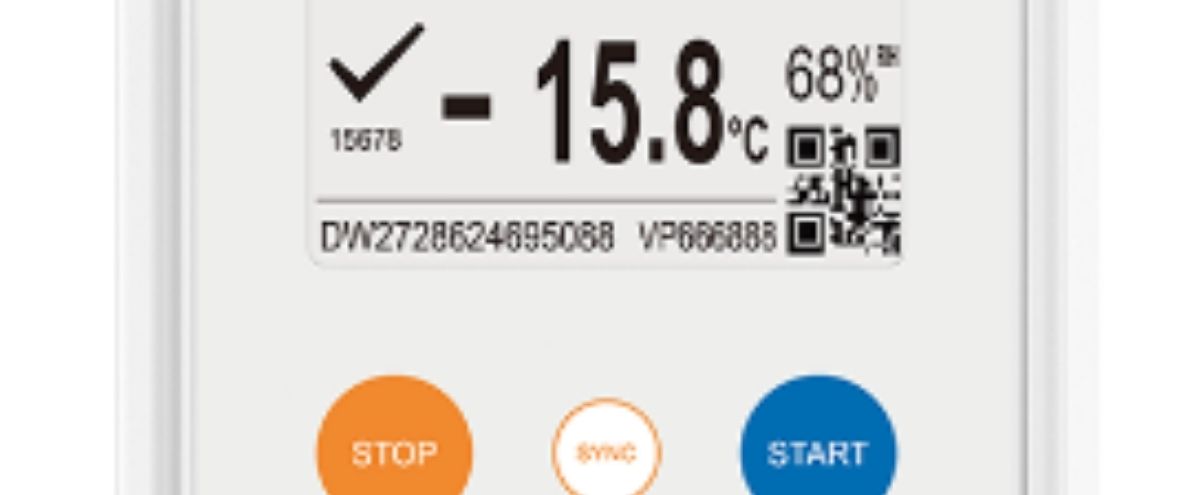
For example, Tempnote’s Frigga V5C supports real-time cloud-based monitoring, high and low alarms, secure PDF and CSV reports, and cellular 4G/5G communication.
Traditional logging can tell you what happened after the shipment. Best Wireless temperature monitoring can give you access to data while the shipment is moving.
That difference can matter when a product is highly temperature-sensitive.
A temperature excursion occurs when the shipping temperature exceeds the recommended bounds.
A wireless system with alerts can alert your team that an out-of-range excursion has occurred. It may not always save the product, but it buys your team additional time to evaluate and respond.
With paper-based logging, the records are often hard to decipher. Many digital systems come with activity reports for system/compliance/quality checks.
The CDC states that digital data loggers provide detailed information regarding how long a storage unit has been outside of its recommended settings.
Some connected systems provide more than temperature data. Temnote’s Frigga T71 Pro merges shipment data with temperature data and tracks the behavior of the shipment during transport with data on location, position, and movement.
Here is the practical difference:
| Traditional approach | Wireless monitoring |
|---|---|
| Data may be reviewed after delivery | Data can be viewed during transit |
| Excursions may be found later | Alerts can flag defined deviations |
| Manual retrieval may be needed | Remote access may be available |
| Limited visibility between checks | Continuous recorded data |
The goal is not simply to collect more data. It is to make useful temperature information available when your team can still act on it.
A temperature-sensitive operation can benefit from these systems in several ways:
The current WHO temperature-monitoring specifications cover a wide range of devices, including basic indicators and thermometers to advanced monitoring and communication systems, reinforcing the need to select equipment according to the specific cold-chain application.
Wireless temperature loggers should not be chosen solely based on their connectivity. Check:
For example, the Frigga V5C lists a -30°C to +70°C measurement range, ±0.5°C accuracy from -20°C to +40°C, a customizable 10-minute recording interval, 120-day runtime, and EN 12830 and 21 CFR Part 11 compliance.
Cold chain monitoring is more useful when your team can see temperature conditions before a shipment reaches its destination. A wireless temperature data logger system can combine continuous recording, remote access, alerts, and digital reports to give you a clearer view of shipment conditions.
The most important consideration is matching the monitoring system with your product, route, temperature, and quality requirements.
If you are looking for real-time temperature monitoring, consider Tempnote’s solutions and compare features with your cold chain requirements to select a device.
If connectivity is supported, wireless temperature data loggers transmit temperature readings for remote viewing at selected intervals. This eliminates the need to collect the logger to view temperature data.
A wireless temperature logger is capable of capturing temperature data during the logging process, as well as programming temperature limits. Should a temperature limit be exceeded, an alert is triggered.
A wired temperature logger captures temperature for later logging. A wireless temperature logger captures temperature and allows the logging team to monitor data and set alerts for the process.
Real-time temperature monitoring is essential to address potential violations of shipping temperature requirements. Temperature logs capture the time and temperature of shipments to ensure temperature excursions are addressed quickly, and appropriate remediation to the shipping process is undertaken.
Review temperature ranges, logging intervals, alerts, connectivity, battery life, reporting, data security, compliance, logging data, and temperature logging systems that meet your operational needs.