Your cart is currently empty!


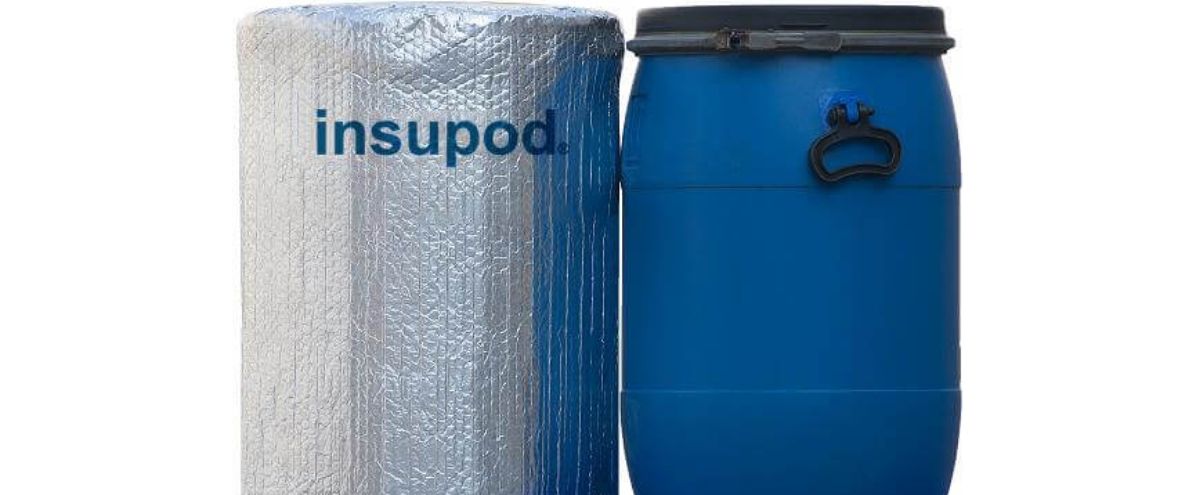
This blog helps industries like pharmaceutical, chemical, food, logistics, and others that depend on temperature control understand how thermal drum covers allow for safe storage and transport. It explains how affordable insulated drum covers work, describes key considerations for choosing a thermal drum cover, and describes how thermal drum covers can help, based on the temperature duration, temperature range, insulation level, drum size, and temperature monitoring. The goal of this blog is to help select the right thermal drum cover based on actual product and transport requirements instead of a blanket solution.
A sealed drum does not automatically mean its contents are protected from heat or cold. During loading, warehouse storage, road transport, cross-docking, or delays, outside temperatures can affect temperature-sensitive materials. This matters even more when you handle pharmaceuticals, APIs, chemicals, food ingredients, paints, coatings, oils, or other products with defined temperature requirements.
Thermal Drum Covers have several benefits. First, they help reduce the impact of external temperature changes. Second, covers help speed product transport because less time is needed for product temperature stabilization. Your product, temperature range, exposure time, drum size, and transport conditions all matter.
Table of Contents
Thermal covers isolate the drum from the effects of external temperature changes and thus help maintain the temperature of the contained material. Unlike other drum covers, which are mostly designed to prevent the effects of moisture, sunlight, or dirt, these covers are specially designed to prevent the effects of temperature changes on temperature-sensitive materials.
The WHO recognizes passive shipping containers as one of the methods of temperature-controlled pharmaceutical transportation. Packaging systems and temperature monitoring devices form physical elements of temperature controlled transport system.
Consider a pharmaceutical drum leaving a controlled warehouse on a hot day. The product may start within its required range, but loading delays or time on a vehicle can expose it to higher ambient temperatures.
This is where Insulated Drum Covers and other Drum Thermal Covers can provide useful passive protection.
For pharmaceutical operations, WHO’s current guidance continues to emphasize temperature mapping and monitoring as important parts of maintaining suitable storage conditions.
Here’s the thing: a thermal cover is not an active cooling unit. If your product requires continuous refrigerated conditions, the cover should be considered part of the wider industrial temperature control process rather than a replacement for refrigeration.
Start with these five questions.
Your product specification should come first. Tempnote lists thermal-cover options designed for 15°C to 25°C, while some heavier constructions are specified for 2°C to 8°C and 15°C to 25°C applications.
A short transfer between facilities is different from a long road shipment. Tempnote’s listed models include different protection specifications, including up to 4 hours for TC100 and 8+ hours for TC500 constructions.
Construction can include reflective and insulating layers. For example, Tempnote lists Met-Wov-Met construction for TC100 and aluminum bubble aluminum foil construction for its TC500 models, with 97% reflectivity listed for these products.
A suitable fit matters. Check drum dimensions, coverage, handling requirements, and whether you need a standard or bespoke solution.
For temperature-sensitive pharmaceutical shipments, monitoring gives you actual temperature data rather than an assumption that the cover performed as expected. WHO guidance specifically identifies temperature-monitoring devices as part of quality-assured temperature-controlled transport.
| Cover specification | Example application | What to check |
|---|---|---|
| 15°C–25°C | Controlled-temperature materials | Exposure time and ambient conditions |
| 2°C–8°C | Cold-chain products | Required protection period and monitoring |
| 8+ hour protection | Longer transit or handling periods | Longer transit or handling periods |
| Reflective construction | Heat exposure | Reflectivity and insulation |
| Bespoke size | Different drum configurations | Exact dimensions and coverage |
The important point is that these figures are product specifications, not a promise that every shipment will remain within its required range in every environment. Actual performance depends on conditions such as starting temperature, ambient temperature, exposure time, packaging setup, and handling.
Pharmaceutical manufacturers and Pharma Logistics & 3PL providers can use thermal protection as part of a wider cold-chain process.
For Chemical API manufacturers, the most important consideration is the product’s own storage requirement. It is important to consider the effects of different reactions to heat or cold; thus, the thermal cover selection should be based on the product specification and not on a general assumption.
Temperature control is important for Food & Beverage manufacturers for quality assurance when products are stored and shipped. Paint & coating manufacturers and Oil & lubricant companies would similarly need to consider the temperature limits.
For warehouse teams and procurement managers, this is often a logical choice: match the cover to the drum, temperature range, exposure time, and handling process.
Before using Industrial Drum Covers, we recommend a simple check:
This process gives your team something better than a guess. You can compare the expected conditions with the actual shipment data and improve future packaging decisions.
The best Thermal Drum Covers are not necessarily the thickest or most expensive. The smartest choice is a Thermal Drum Cover designed specifically for your product, expected exposure time, the thermal environment, the size of the drum, and the Cold Chain.
For example, a thermal cover suitable for the temperature range 15°C to 25°C may be just fine for a particular shipment, while for a temperature range of 2°C to 8°C a completely different cover would be required. The Tempnote range should be a warning to everyone to always check the specifications of a thermal cover that is being considered.
If you are looking for Temperature Control Drum Covers for temperature-sensitive materials, you can review the specifications and select the cover that meets your storage and transport needs.
Thermal drum covers are insulating covers that shield against external temperature fluctuations. They protect the contents during storage, transport, and handling.
No. They combat temperature changes; therefore, they do not heat or cool the product.
They can form part of a temperature-controlled packaging process when the cover is appropriate for the product and shipment conditions. WHO also recommends suitable packaging and temperature monitoring for quality-assured pharmaceutical transport.
The first consideration is the temperature range that needs to be maintained and the length of time the cover will be in use. Other considerations include insulation, reflectivity, drum size, protection time, and the ‘hands-on’ time, and whether the temperature monitoring pick contributed to the design of the cover.
Not always. Thermal drum covers maintain passive protection during the duration of the transport. Even if the packaging and transport requirements are not active, WHO supports active as well as passive systems during transportation.
