Your cart is currently empty!


Our goal is to offer you a variety of options and insights on the best solutions to house your thermobox liners. We offer insights on cold chain packaging to assist your purchase.
When you ship temperature-sensitive products, your packaging needs to do more than hold the product securely. It must help limit temperature changes throughout transport, especially when shipments face changing outdoor conditions, handling delays, or extended transit times. This is where the best insulated box liners can become an important part of your cold-chain packaging system.
The liner’s thermal barrier is insulation, but several factors come into play when choosing a liner. For example, the shipping container (zone), size, temperature range, time in transit, the method of cold shipping (momentary liquid storage vs. solid ice), and even the surrounding environment and climate are important. According to the FDA, complying with cold chain shipping means pharmaceutical products need to be tested under the expected worst-case shipping time and temperature conditions with a temperature monitoring system.
So, which thermal box liners make sense for your shipment in 2026? Let’s look at the materials, specifications, applications, and practical selection factors that can help you make a better choice.
Insulated box liners are protective materials placed around products or inside shipping packaging to reduce temperature exchange with the outside environment. They are commonly used as part of thermal protection packaging for cold-chain logistics.
Depending on their construction, box insulation liners can use reflective materials, aluminum, nonwoven layers, or bubble insulation.
Tempnote’s Insupod range shows why specifications matter. Its TC500 models use aluminum-bubble-aluminum construction, have 97% reflectivity, and are designed for 2°C to 8°C and 15°C to 25°C applications. The listed protection is 8+ hours.
Before choosing cold chain box liners, check four things.
| What to check | Why it matters |
|---|---|
| Temperature range | Your product may have a specific storage requirement |
| Transit time | Longer shipping needs suitable thermal protection |
| Material and thickness | Construction affects heat transfer |
| Ambient exposure | Sun, heat, cold, and delays can change conditions |
For example, WHO states that most vaccines used in immunization programs are licensed for storage and distribution at 2°C to 8°C, while some products require colder conditions.
That means you should never choose a liner simply because it is thicker. The full packaging setup needs to match your product requirements.
Reflective materials can help reduce heat gain from external radiation. Tempnote lists 97% reflectivity across its Insupod models and offers several material constructions and thicknesses.
Bubble insulation adds an air-based insulating layer. Tempnote’s TC500 models combine aluminum foil with bubble insulation and are listed at 8 mm and 20 mm thicknesses.
A thicker liner may be useful when greater thermal protection is required, but thickness alone does not guarantee a particular shipping temperature. Route conditions, product volume, coolant, carton size, and transit time all matter.
For businesses handling larger volumes, practical storage matters too. Tempnote lists its thermal covers as foldable and stackable, with Euro/ISO pallet sizes and bespoke solutions available across the range.
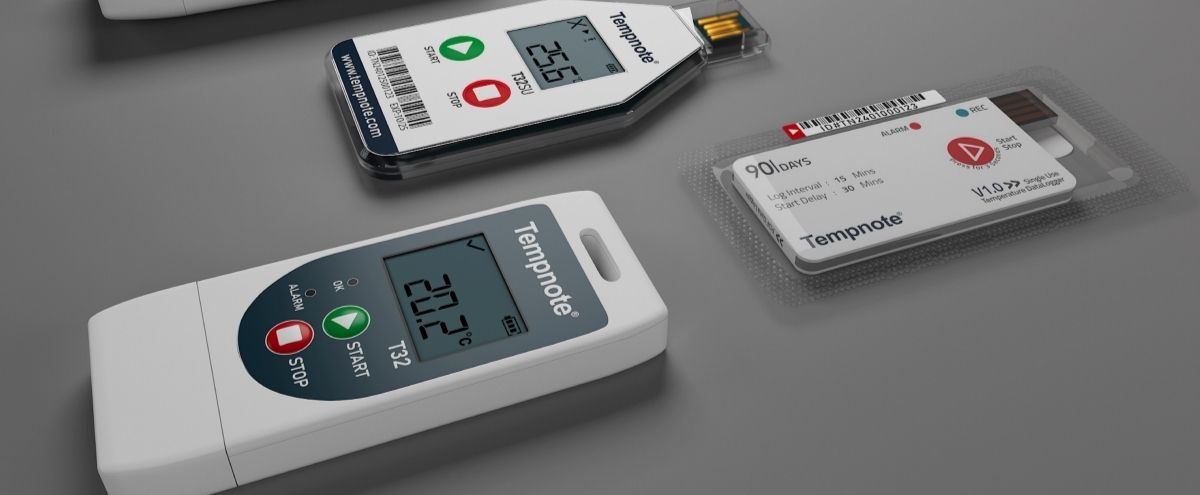
This last step is easy to overlook. Insulation helps protect your shipment, but temperature monitoring provides evidence of what happened during transport. WHO guidance includes temperature monitoring devices for insulated shipping containers and cold-chain equipment.
Suppose you are shipping a temperature-sensitive pharmaceutical product that must remain between 2°C and 8°C.
You would not select an insulated shipping box liner based only on its appearance or thickness. You would look at the product, transit, seasonal temperature, the size of the box, the coolant placement, and any monitoring requirements.
This method is useful for food, seafood, dairy, clinical supplies, and other products for which the quality is impacted by changes in temperature.
Tempnote thermal covers are intended for the short-duration transit of temperature-sensitive products or for conditions of mild temperature change.
The best insulated box liners are not simply the ones with the biggest thickness or the longest marketing claim. The better choice is the one that fits your actual shipping conditions.
For temperature-sensitive products, we should also look beyond insulation. A complete cold-chain plan may include the right carton, coolant, liner, handling process, and temperature monitoring.
Tempnote provides solutions for thermal protection and monitoring of cold-chain shipments. Find something that works for your product and shipping requirements.
Insulated box liners stabilize the temperature of a shipment by minimizing the temperature differential between a shipment and its surrounding environment as a component of a cold chain box.
Insulated box liners are used as a component of a cold chain pack for pharmaceuticals; however, the entire pack must comply with temperature, transit time, and product specifications.
There is no universal best material. Compare construction, thickness, temperature range, transit time, ambient exposure, and the complete packaging setup.
There are systems that can maintain this range. Models of Tempnote’s TC500 are listed for 2°C to 8°C and 15°C to 25°C, with protection for 8+ hours.
It is recommended that temperature monitoring be implemented. WHO recommends temperature-monitoring systems for all cold chain situations.
