Your cart is currently empty!


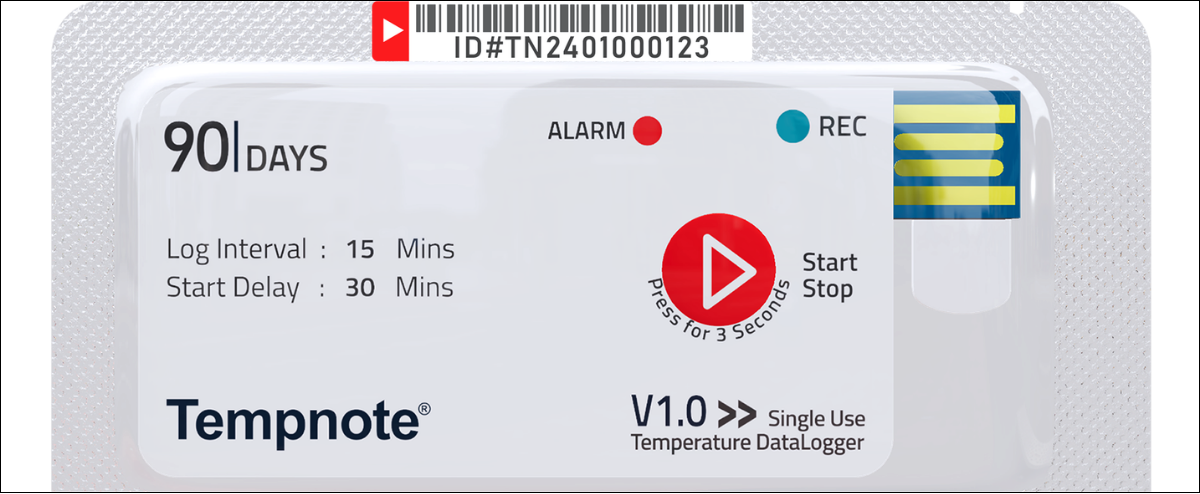
This guide explains how a 2G Temperature Data Logger supports product safety through continuous recording, remote alerts, and long-duration monitoring. We’ll also look at where this technology is useful and what you should check before choosing a logger.
A temperature-sensitive shipment can look perfectly fine when it reaches its destination, but that does not tell you what happened during transit. Temperature excursions can occur while products are being transported or stored, putting medicines, vaccines, food, and other sensitive goods at risk.
Real-time temperature data loggers become useful in this scenario. They are able to keep track of the temperature throughout the day and are able to send data to your team using a 2G cellular network, providing greater visibility to goods in transit. The Tempnote Frigga V5D is one of these models and has a runtime of 60 days, a measurement range of -20 deg C to + 70 deg C, and has an interval of +- 0.5 deg C and a resolution of 0.1 deg C, 28,800 memory values, low and high alarms, and the ability to send reports to the cloud.
In the case of pharmaceutical and vaccine shipments, the accuracy of temperature records is particularly important. The CDC suggests continuous digital data loggers to store vaccines and states that these devices are able to record the time that temperatures remained in excess of the recommended temperature range. The main benefit is that we can identify temperature issues earlier, look back at the events that occurred, and make better choices regarding the shipping.
So let’s get started.
A Real-Time Temperature Data Logger 2G 60 Days is a monitoring device that records temperature over an extended period and uses 2G cellular communication to send selected data remotely.
Tempnote’s Frigga V5D is listed with a -20°C to +70°C measurement range, ±0.5°C accuracy, 0.1°C resolution, 28,800-value memory, and 60-day runtime. Its recording interval can be configured through the cloud platform, with high and low temperature alarms available.
Here’s the thing: the 60-day period is useful when shipments face long transit times, delays, storage stops, or several handoffs. You get a longer record instead of relying only on the final temperature reading.
First and foremost, continuous temperature monitoring is critical to protect temperature-sensitive products.
Imagine a shipment of a temperature-sensitive pharmaceutical product that sits in a warehouse, a truck, an airport, and a distribution center with multiple handoffs. Each handoff carries a risk of a short temperature rise. Without ongoing monitoring, your team may only learn about it after delivery.
With a Wireless Temperature Data Logger, the process is different:
CDC recommends continuous digital data loggers for vaccine storage, with recording intervals of at least every 30 minutes. CDC also notes that these devices show how long temperatures remained outside the recommended range.
WHO also classifies remote temperature monitoring systems and data loggers as tools used across cold-chain operations.
Suppose a vaccine shipment experiences a refrigeration issue during transit. A real-time logger can alert the responsible team when the temperature crosses the configured limit. The team can then investigate the event instead of waiting until the shipment arrives.
The logger does not decide whether the vaccine remains usable. Qualified personnel must assess the excursion according to the product requirements and applicable procedures.
| Industry | Practical Use |
|---|---|
| Pharmaceuticals | Monitor medicines and temperature-sensitive products |
| Healthcare | Support vaccine cold chain monitoring |
| Biotech | Record conditions for sensitive biological materials |
| Food & Beverage | Monitor perishable products during transport |
| Logistics & 3PL | Track temperature conditions across shipments |
| Importers & Exporters | Monitor longer international shipments |
| Quality Assurance | Review temperature history and investigate excursions |
TempNote lists pharmaceuticals, biotech, fresh produce, dairy, frozen foods, fisheries, logistics, and other industries among the sectors it serves.
An offline logger can provide valuable historical records, but you generally need to retrieve the device or its data before reviewing the full record.
A GSM Temperature Data Logger adds remote visibility. Tempnote’s Frigga V5D uses 2G cellular communication and provides cloud-based monitoring, live shipment information, instant alerts, and PDF reporting.
| Feature | Offline Logger | Real-Time 2G Logger |
|---|---|---|
| Temperature recording | Yes | Yes |
| Remote monitoring | Limited | Yes |
| Alerts during transit | Usually unavailable | Available where supported |
| Long-duration use | Depends on model | V5D: up to 60 days |
| Cloud reporting | Model dependent | Available with V5D |
Before selecting a logger, check five things:
For vaccine and pharmaceutical applications, also review calibration and applicable regulatory requirements. CDC recommends a current calibration report for vaccine digital data loggers.
A Real-Time Temperature Data Logger 2G 60 Days does more than record numbers. It gives your team a temperature history, remote visibility, and earlier warning when conditions move outside defined limits.
For businesses handling pharmaceuticals, food, biotech products, and other temperature-sensitive goods, TempNote’s real-time Frigga solutions provide a practical way to monitor shipments throughout transit.
Ready to improve your cold-chain monitoring? Check out TempNote 2G Temperature Data Logger features and examine the range of temperatures, time, alerts, runtime report, and connectivity with the requirements of your shipping.
A 2G Temperature Data Logger is a wireless device for monitoring and recording temperatures, utilizing 2G cellular technology for the transfer of data. These devices are primarily utilized by the quality and logistics teams to help track and monitor shipment temperatures during product transportation.
In-transit thermal monitoring allows logistics teams to review product temperatures during transportation, removing the need to wait for the shipment to be delivered and review the temperature record then.
Yes, temperature data loggers can be utilized in monitoring the cold chain. However, the device as well as the monitoring procedure must be in line with the specifications of the particular vaccine, organization, as well as the applicable guidelines.
TempNote is offering the Frigga V5D with 2G Cellular, 28800 Memory value, an adjustable recording interval, and a duration of 60 days.
Evaluations of temperature excursions must be done by the quality team or the logistics manager, and the decision should be based on the previously approved limits of temperature, duration, and extent of the excursion.